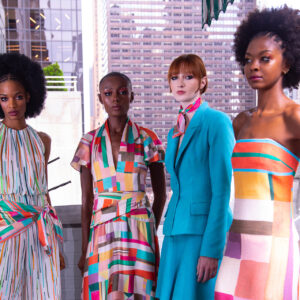




At Brooklyn Fashion Week, a designer’s precise hand & distinctive vision deserved more attention than the evening’s emcee.
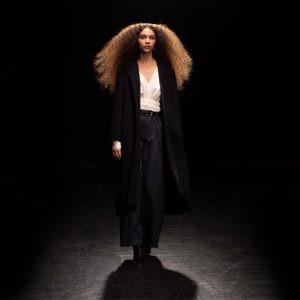
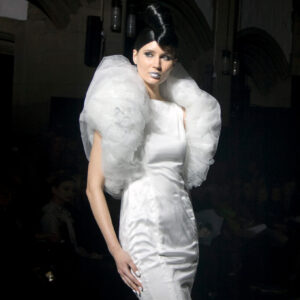
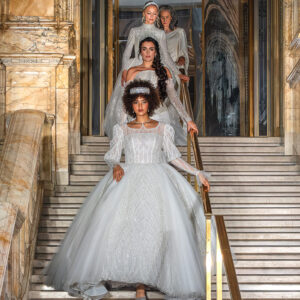
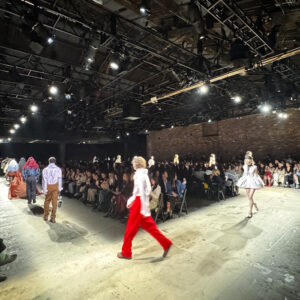
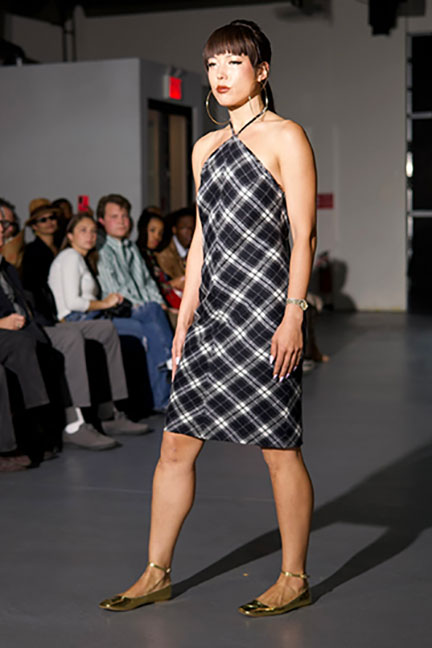
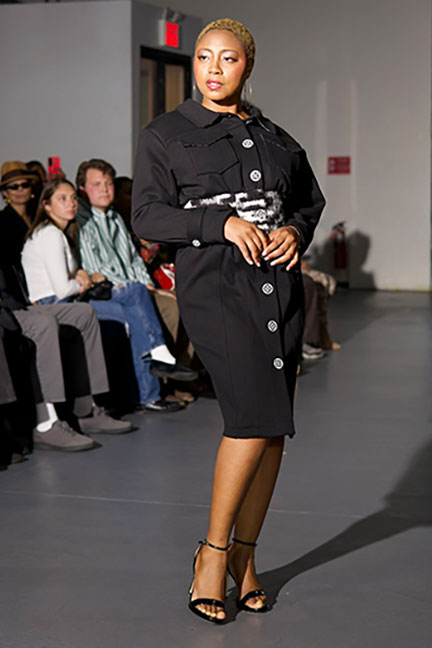
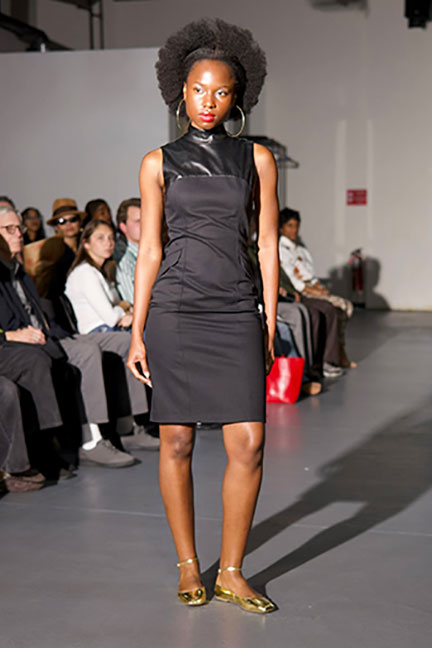
Roberto Silva calls his collection A.Y.O.R.—At Your Own Risk. Judging by his Brooklyn Fashion Week outing, the greater risk would be overlooking him. Inside a street-level club occupying a former industrial loft, the Mexican-born, Brooklyn-based designer delivered clothes with an assured identity: graphic, resourceful & meticulously assembled, with enough attitude to keep their considerable craftsmanship from feeling precious.
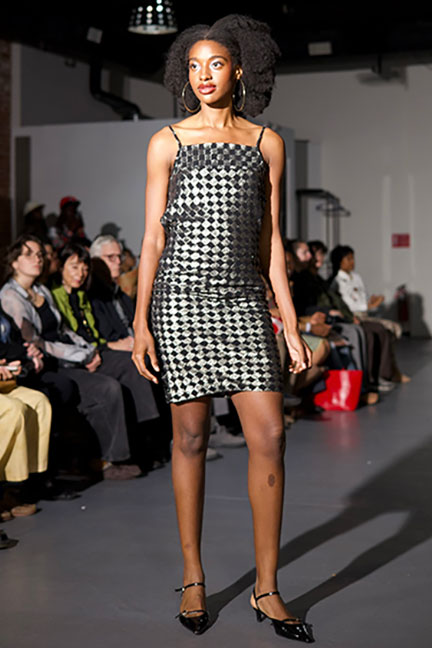
Silva’s particular gift is turning fragments into coherent fashion. Cutting-room remnants, sometimes encompassing 20 or more fabrics, become dresses & jackets whose patchworked surfaces suggest low-resolution photographs resolving into pixels. The reference is technological; the execution is intensely human. Quilting supplies the vocabulary, but Silva gives it a contemporary syntax, bringing an artisanal investment more commonly associated with designer collections & couture into the language of sportswear.
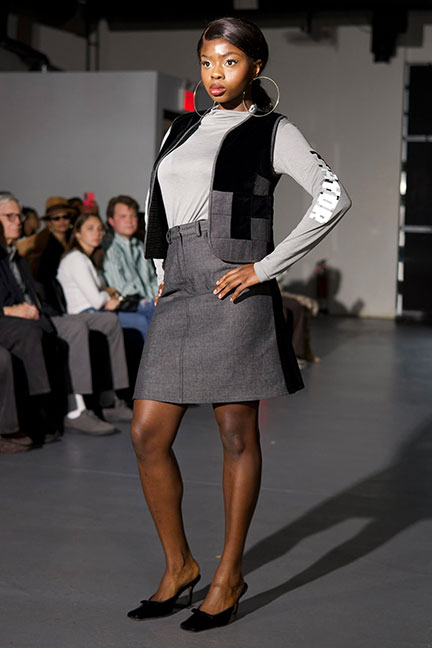
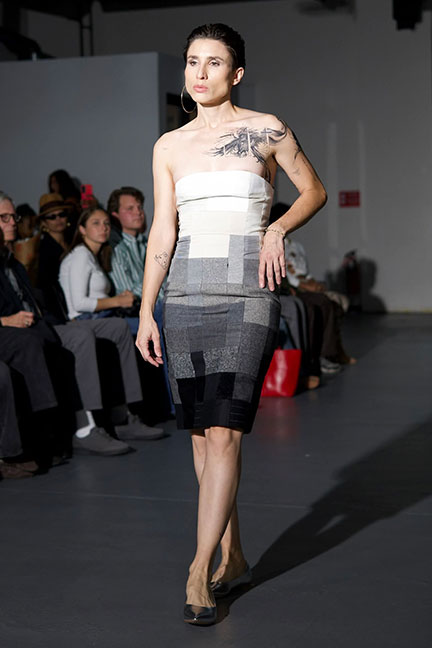
Crucially, he balances those intricate surfaces with clean, assured silhouettes. A strapless dress moved from White through graduated Grey into Black, its rectangular fabric sections creating a remarkably controlled tonal descent. A cropped vest over a Grey top & spare, tailored skirt demonstrated the same discipline. There is something of Mid-Century Modern furniture in Silva’s economy of line: clean proportions, considered construction & very little that does not earn its place.
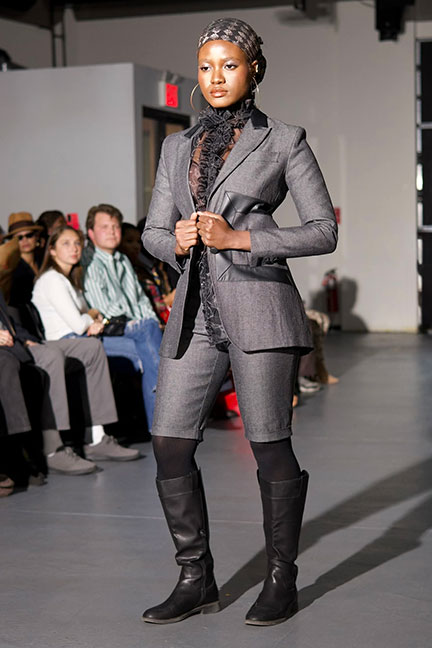
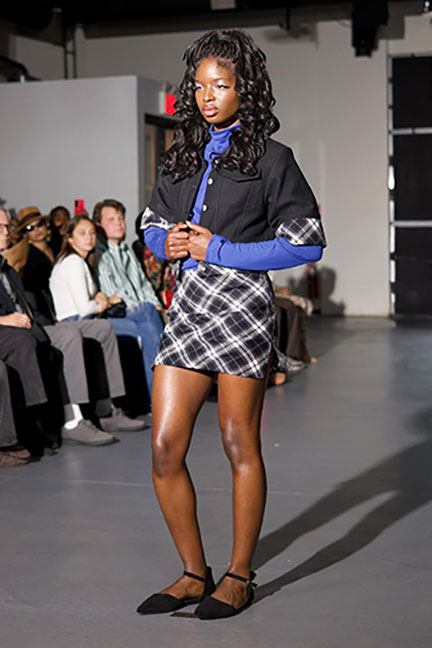
His sensibility, however, is decidedly more Pop than austere. Vintage fabrics, men’s suitings & denim meet without looking like reluctant participants in an upcycling exercise. These are clothes with memories, shaped for the present. One could imagine Molly Ringwald’s resourceful Pretty in Pink heroine recognizing the impulse immediately, then borrowing half the collection for a contemporary remake.
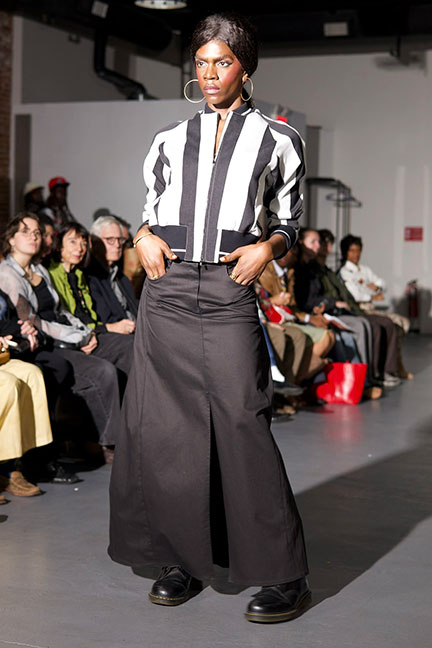
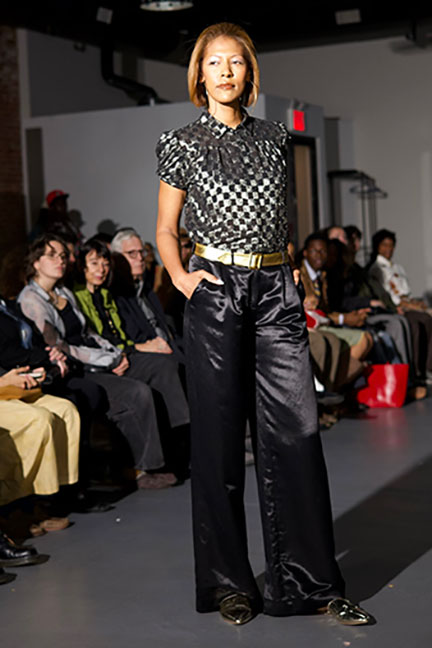
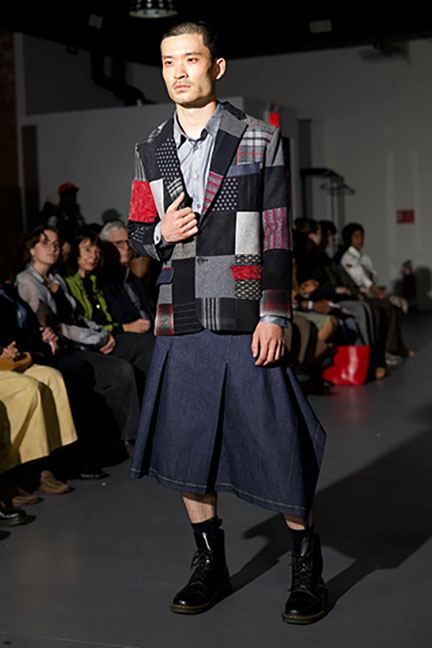
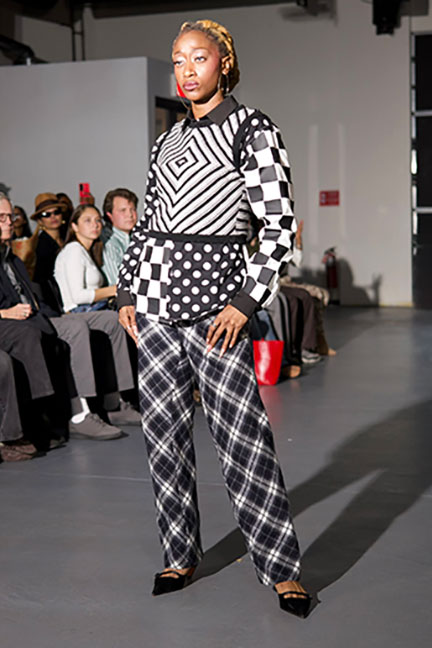
The Black & White pieces were particularly persuasive. Checkerboards, dots, plaid & concentric geometry turned a collared top into an Op-Art proposition, with patterned trousers extending the conversation. That much visual information requires judgment; Silva supplied it. Elsewhere, a patchwork men’s jacket, punctuated with Red, paired with a pleated denim kilt & substantial Black boots, suggested punk without slipping into costume. The rebellion was in the combinations; the construction remained exacting.
That assurance reflects Silva’s work as a sample maker for celebrated New York designers. Here, technical fluency serves a recognizable point of view. Following his critically welcomed NYFW appearance last year, this collection made a persuasive case for a larger platform.
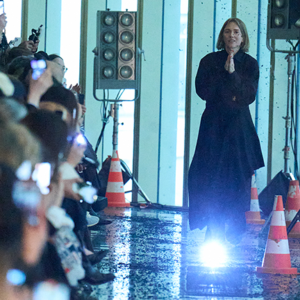
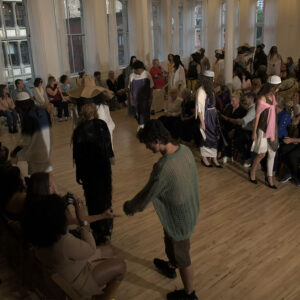
Unfortunately, the evening’s emcee seemed determined to shrink that platform. Brooklyn Fashion Week’s lighting, sound & staging were professionally handled, while several collections warranted serious attention. The founder’s audience participation routines—summoning guests to describe their outfits & walk the runway—repeatedly undercut that credibility. He described the exercise as “embarrassing his audience.” The embarrassment belonged more convincingly to the microphone. Turning a fashion presentation into an awkward participation game made accomplished work feel incidental to the host’s need to entertain.
Silva deserved better framing. His clothes have the craft, clarity & individuality to stand stitch for stitch beside American designers showing across the river. Brooklyn is a credible creative home; it need not define the limits of his audience. A.Y.O.R. is ready for the attention its maker has earned.