

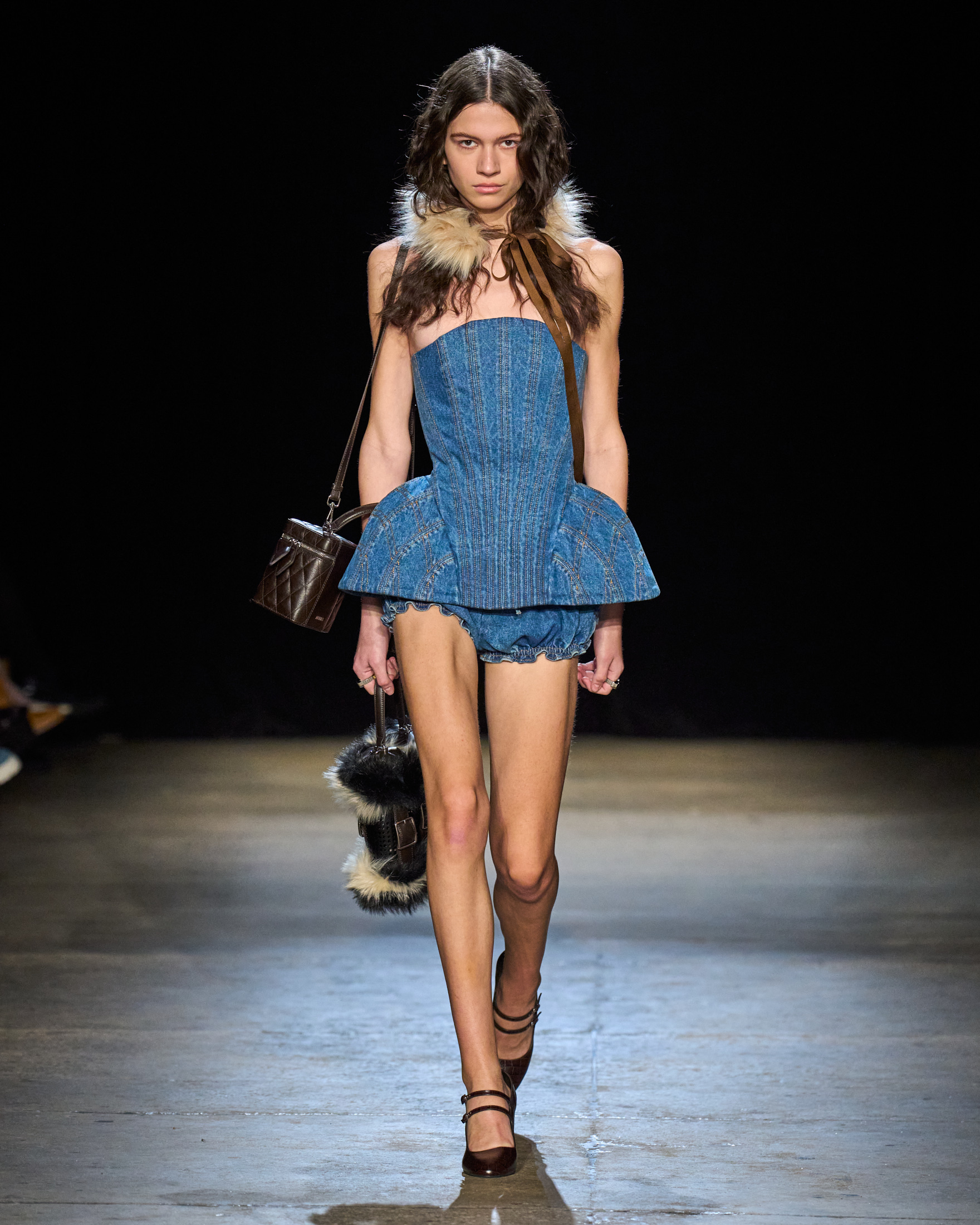

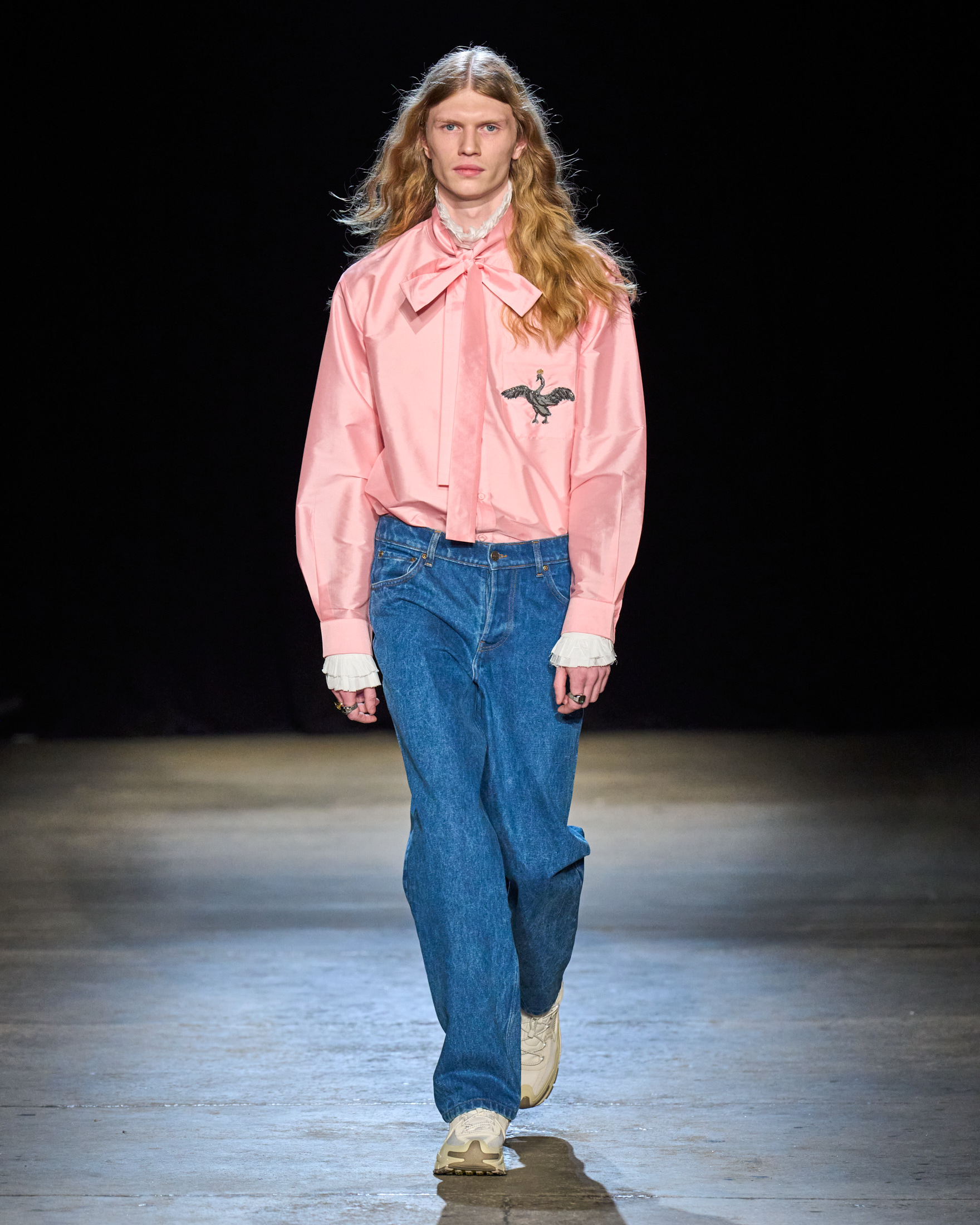
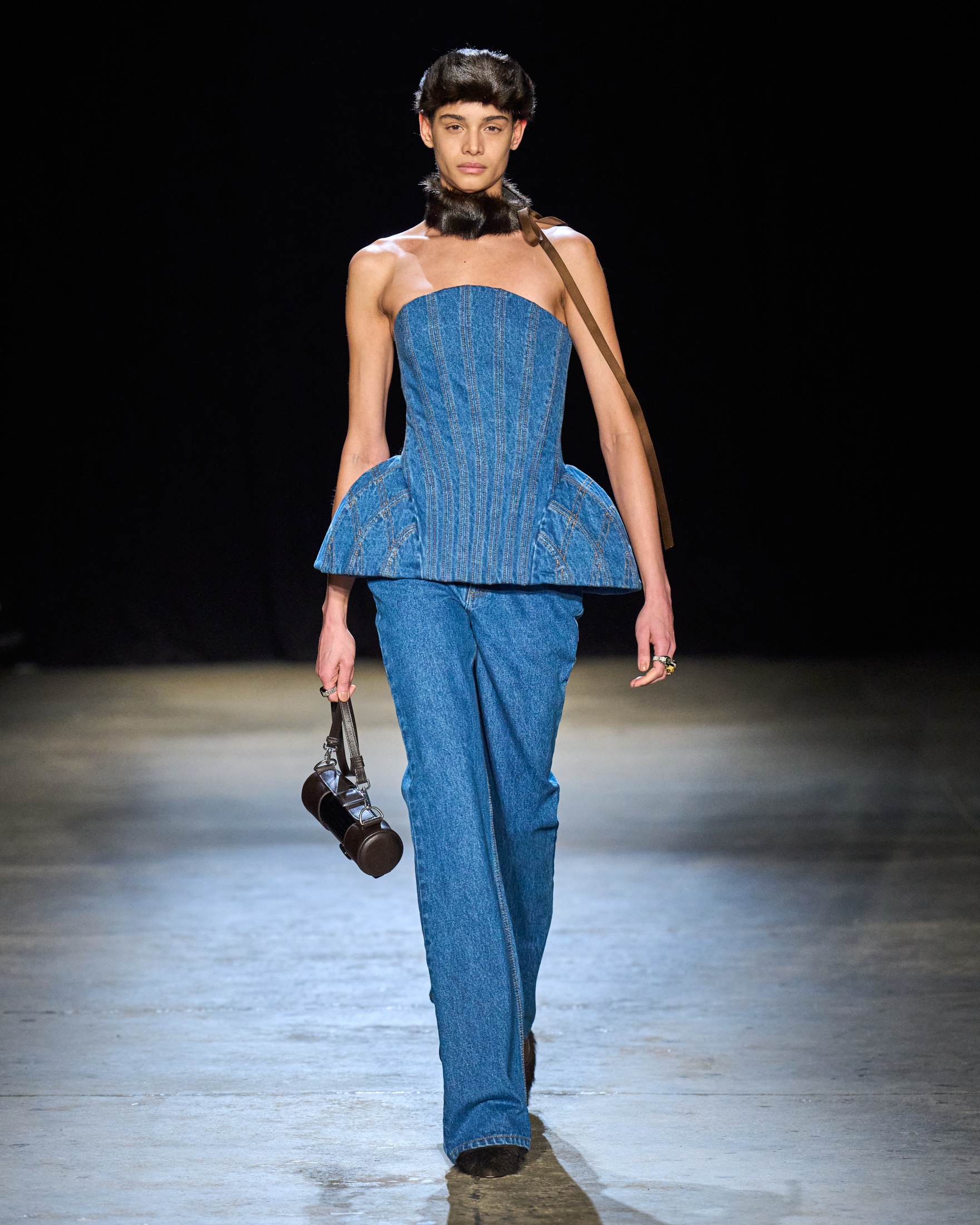
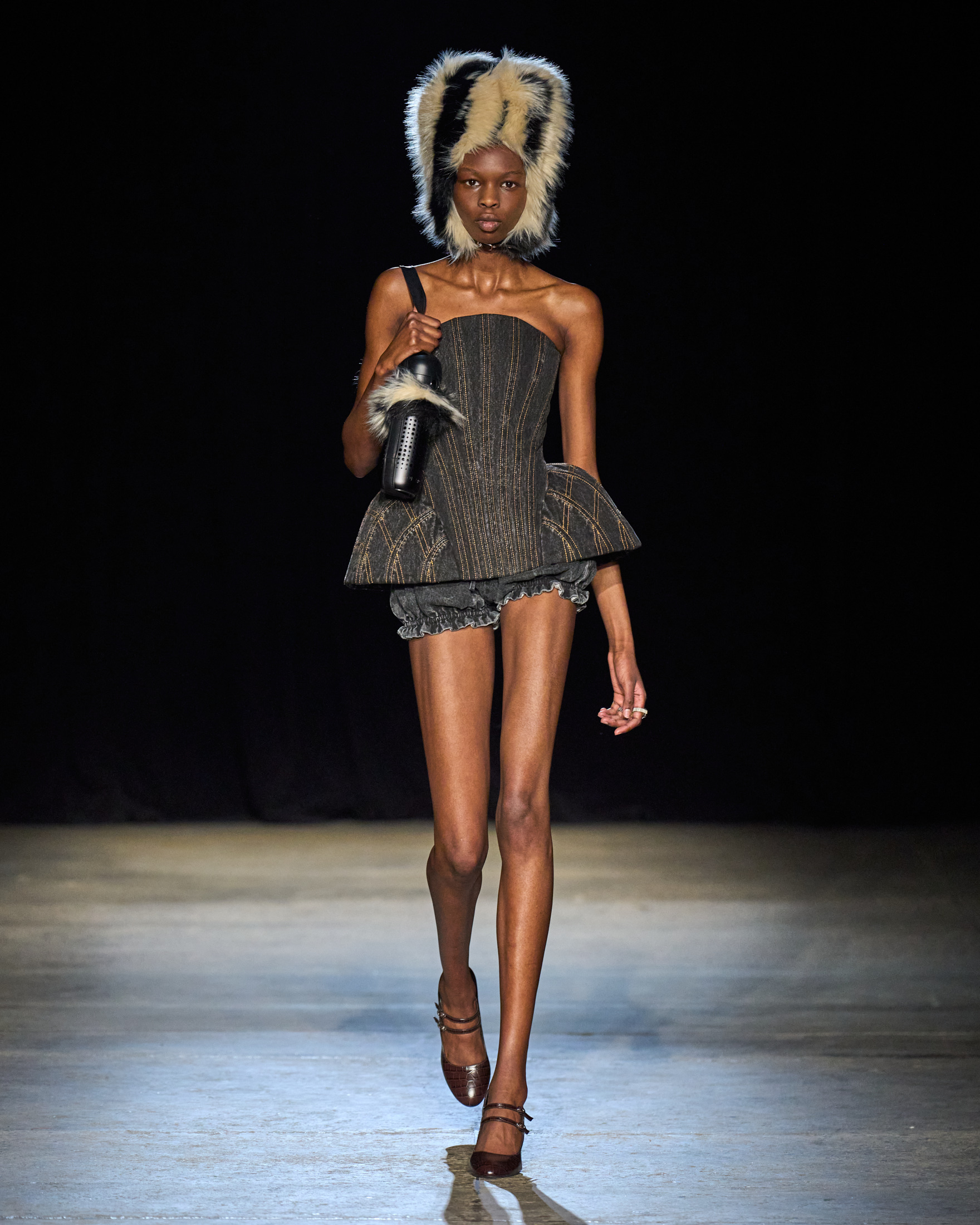
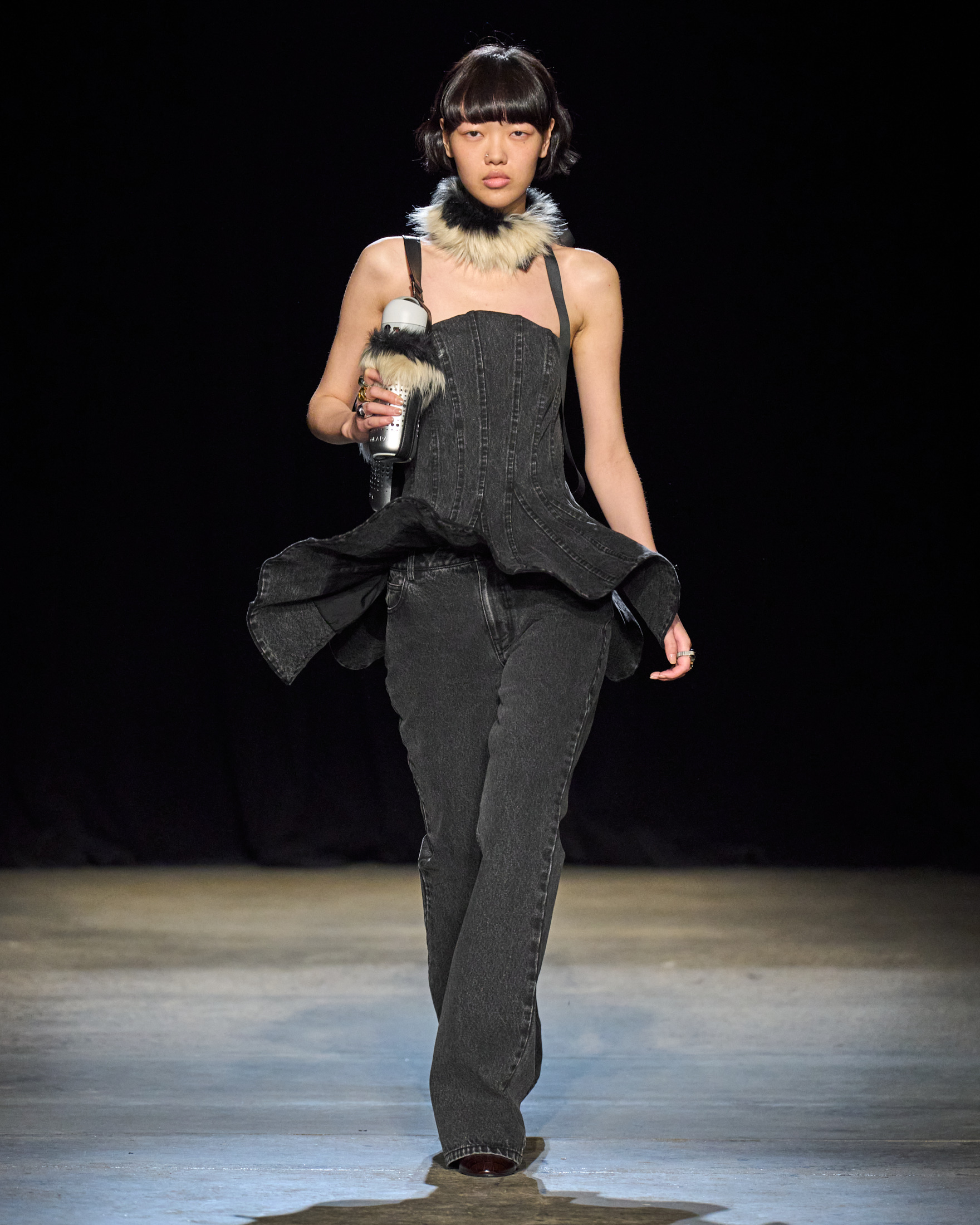
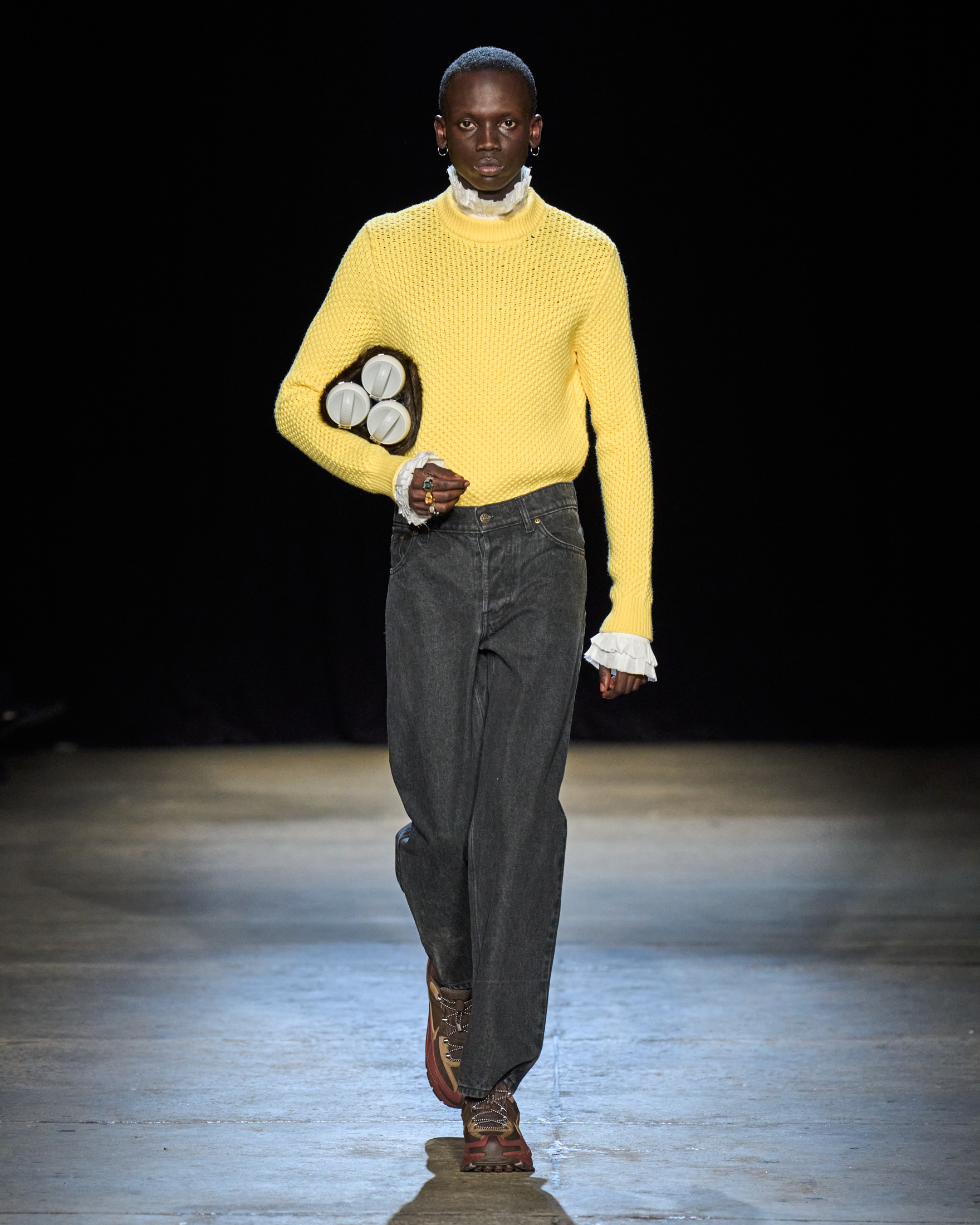
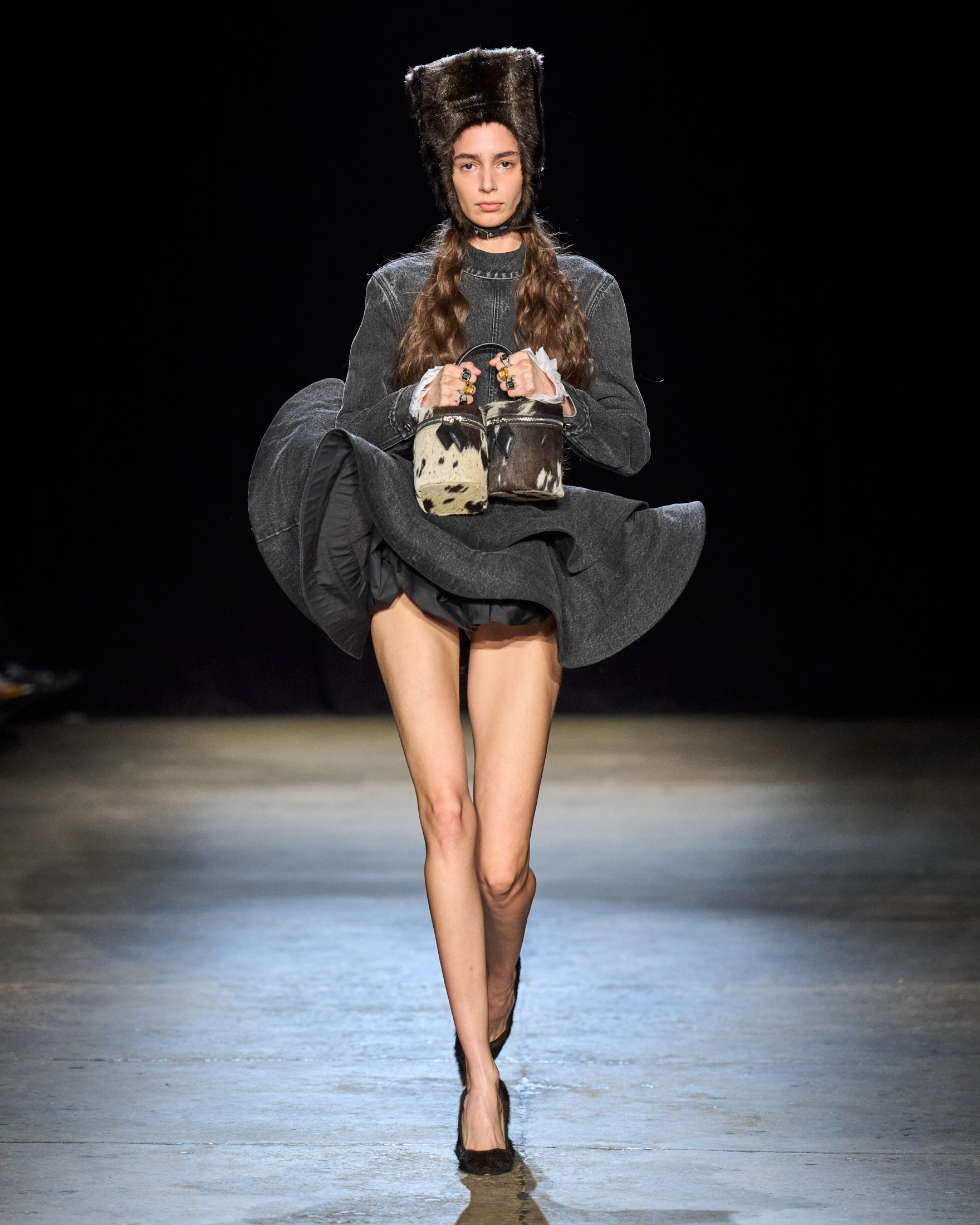

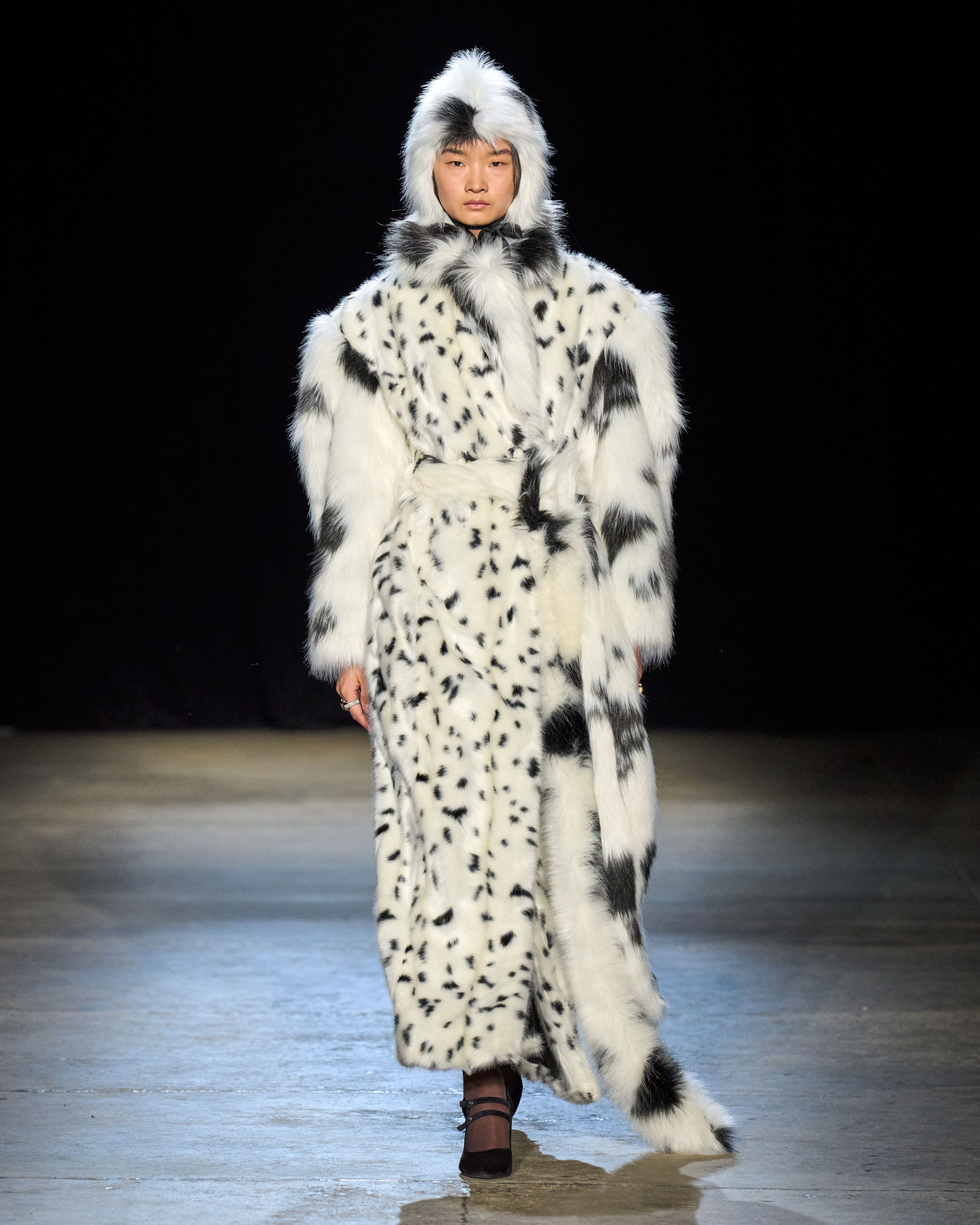

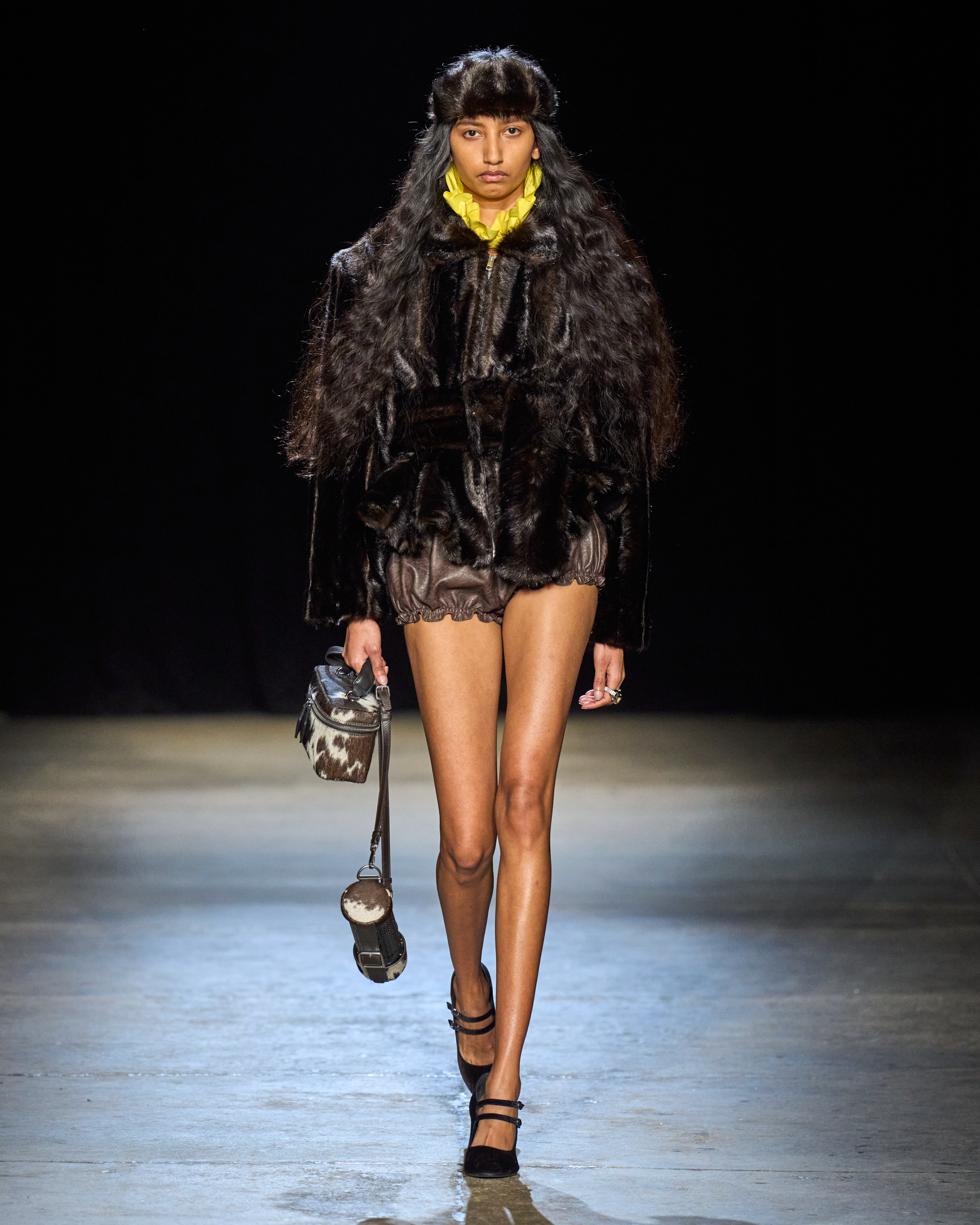
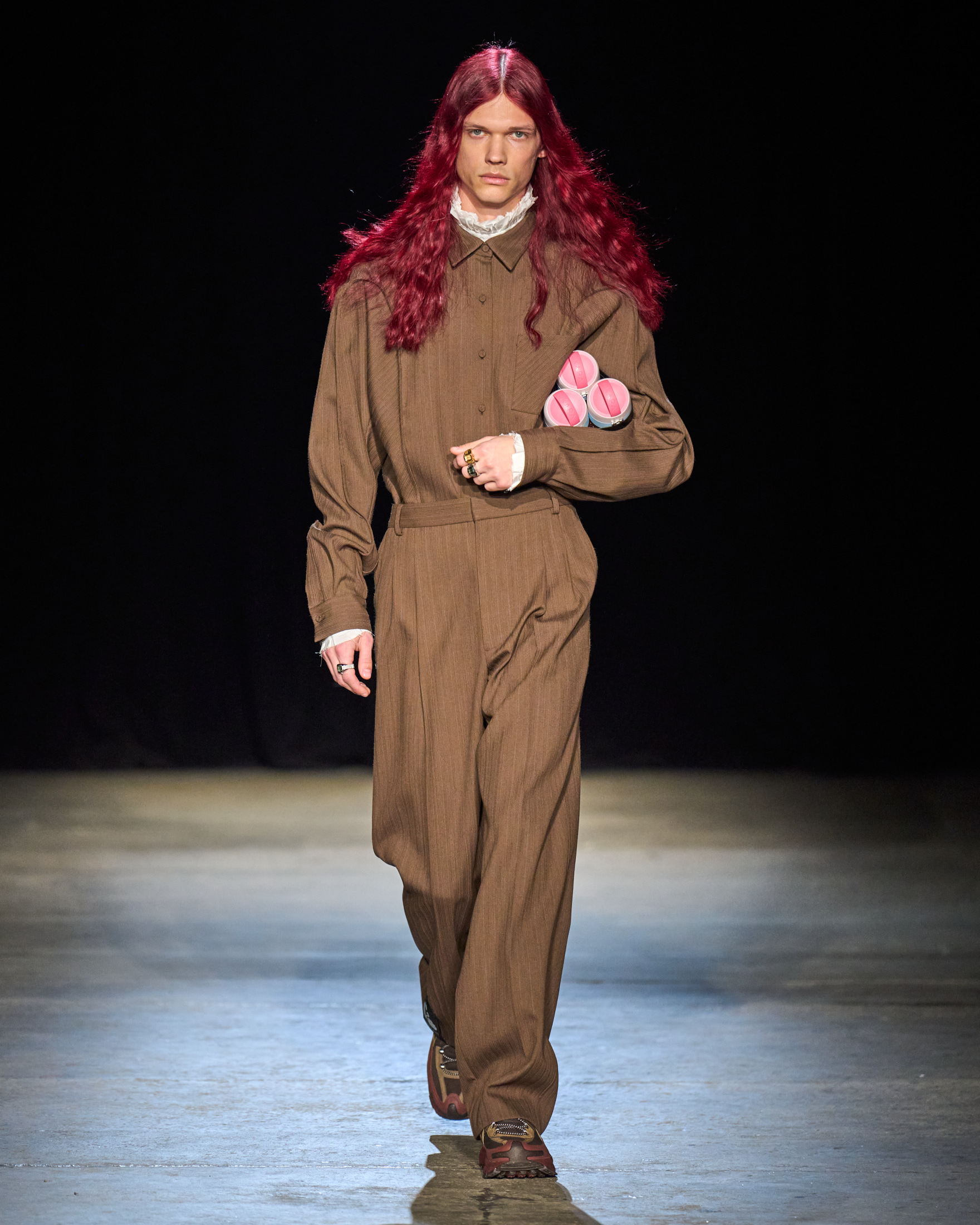

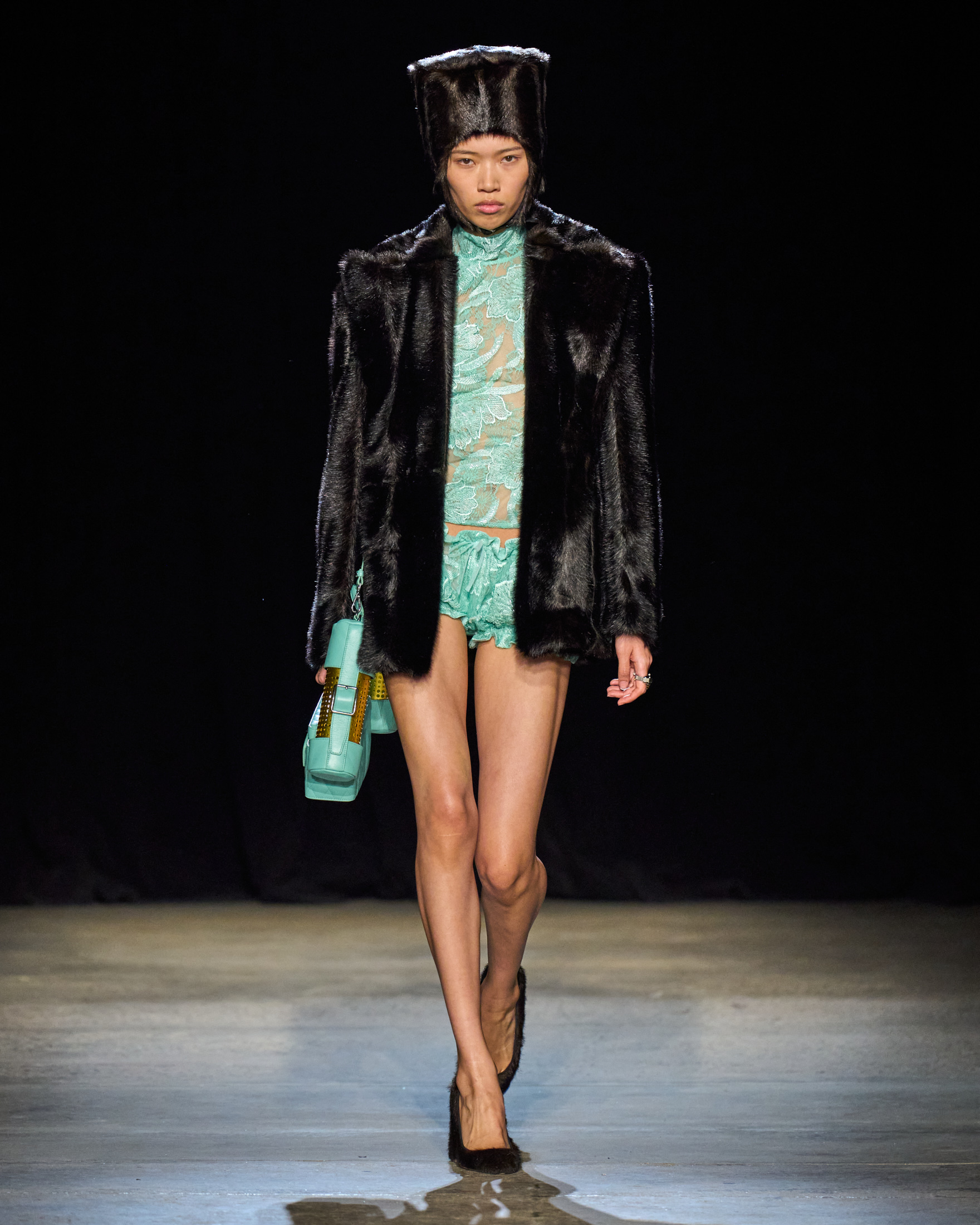
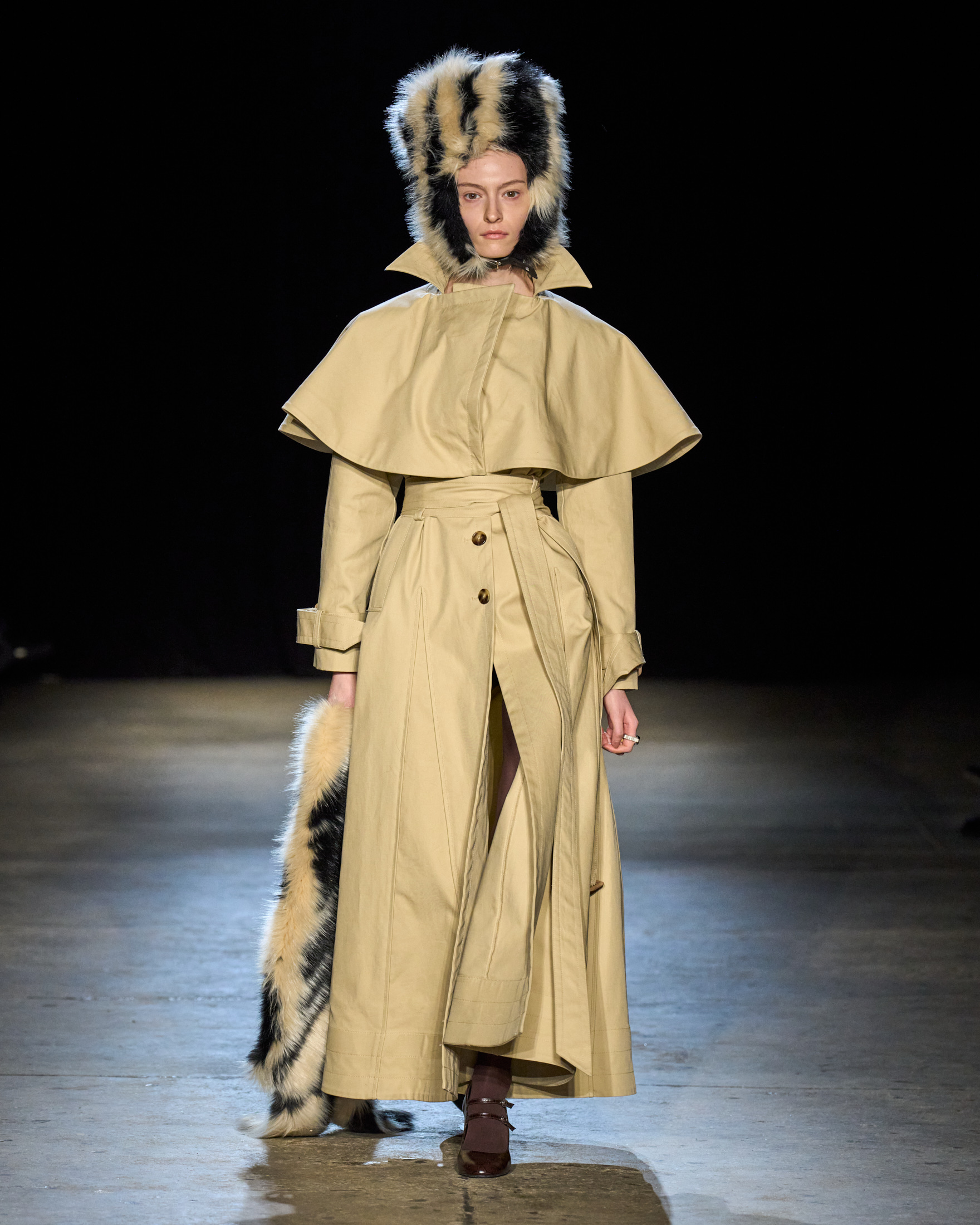
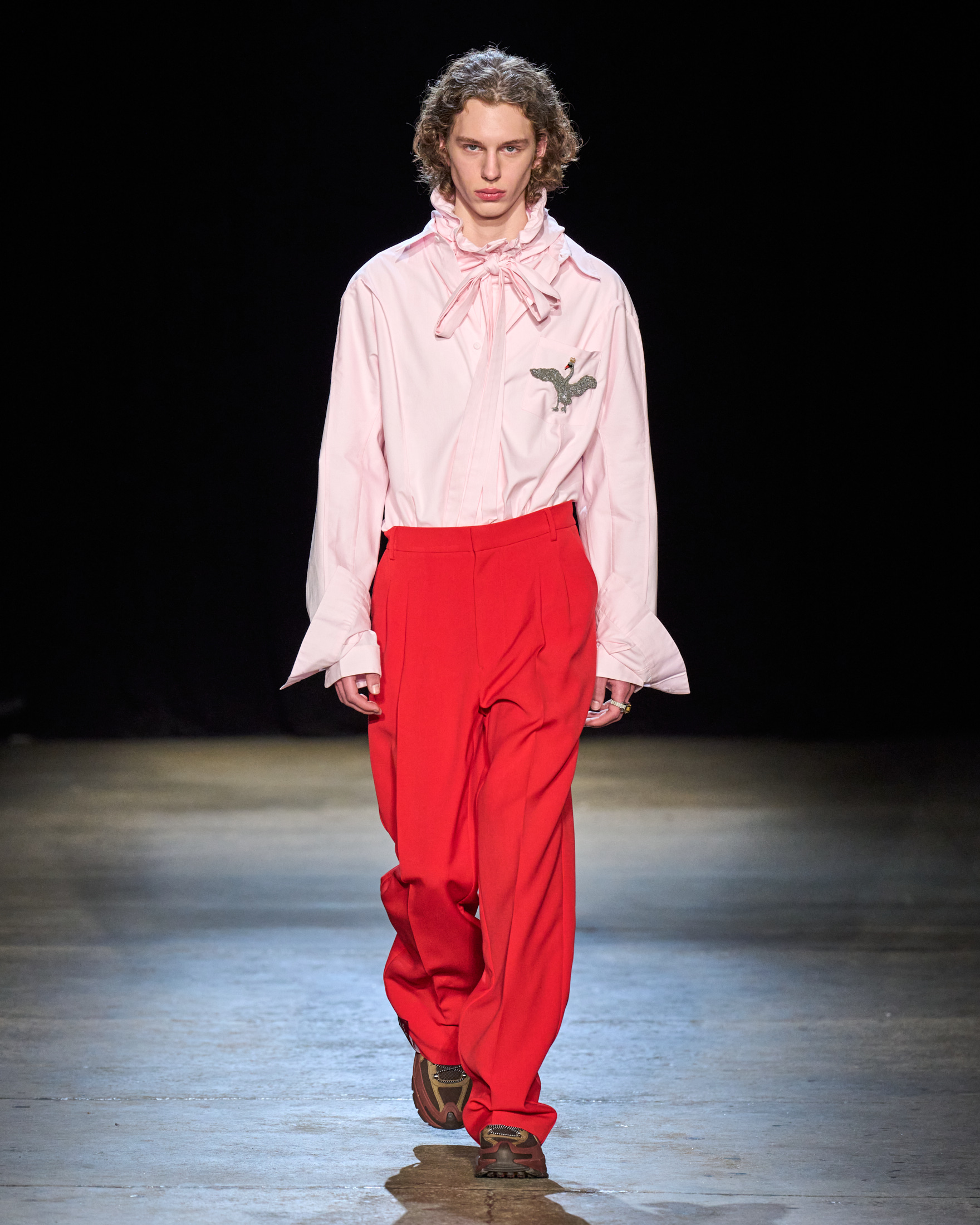
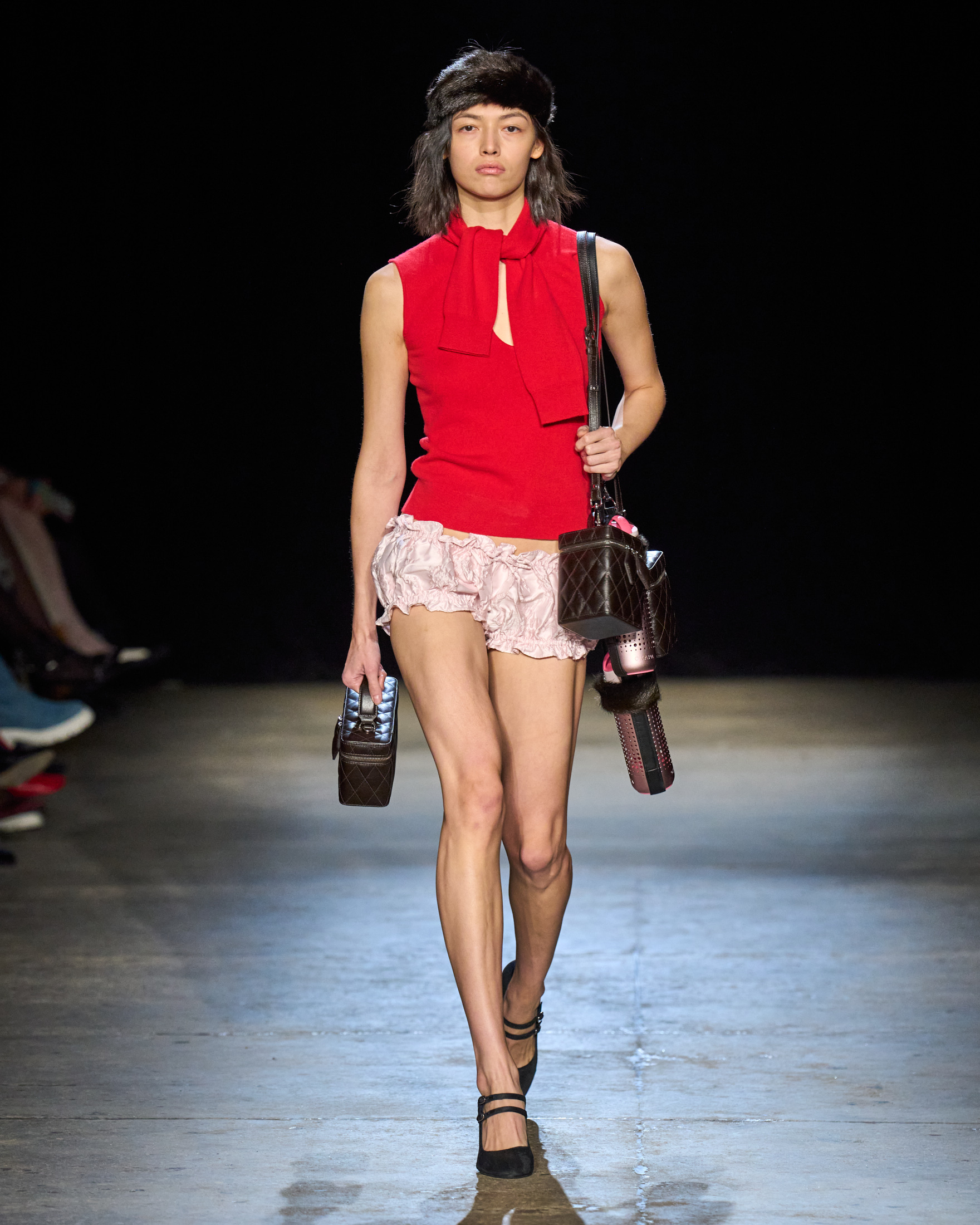
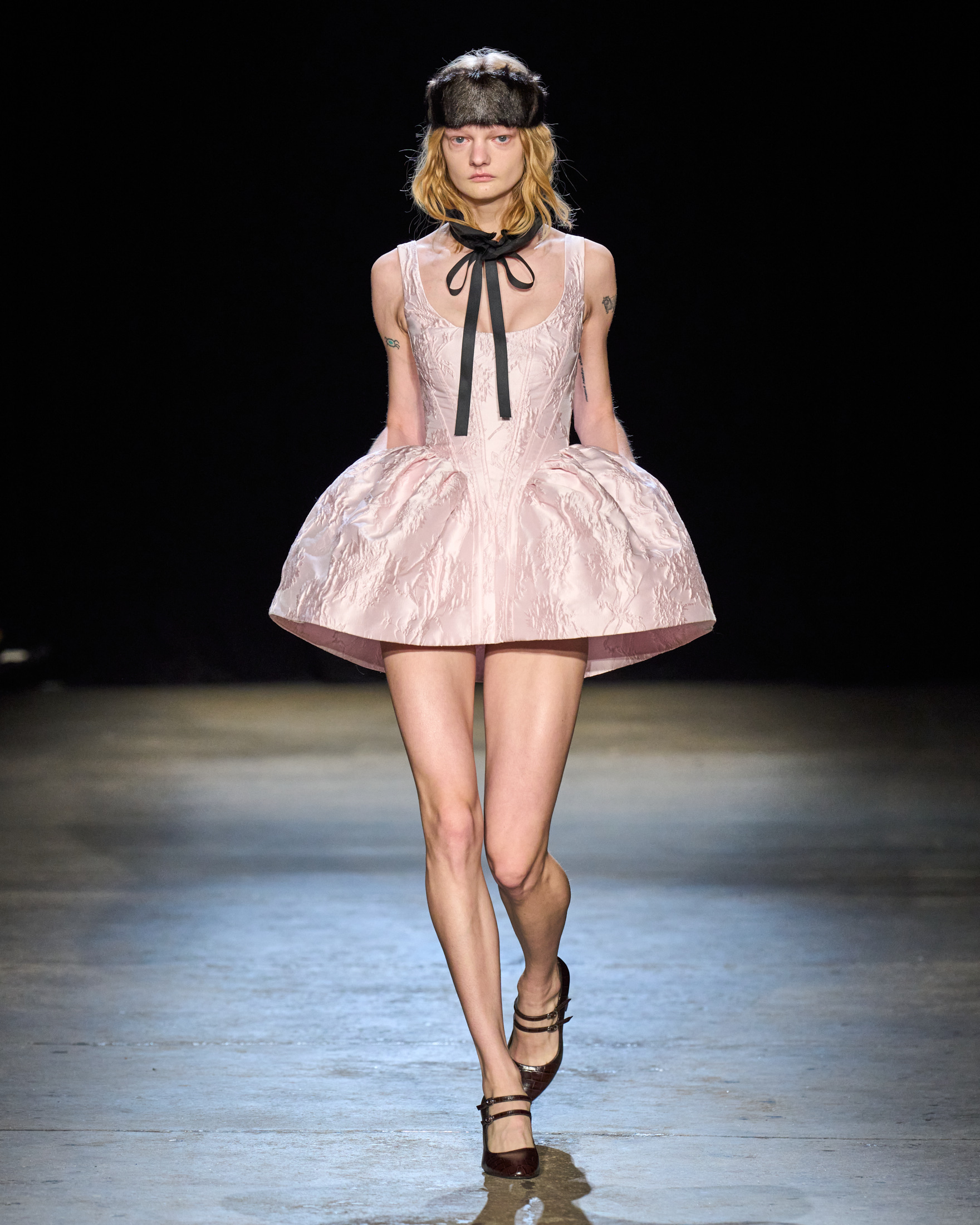
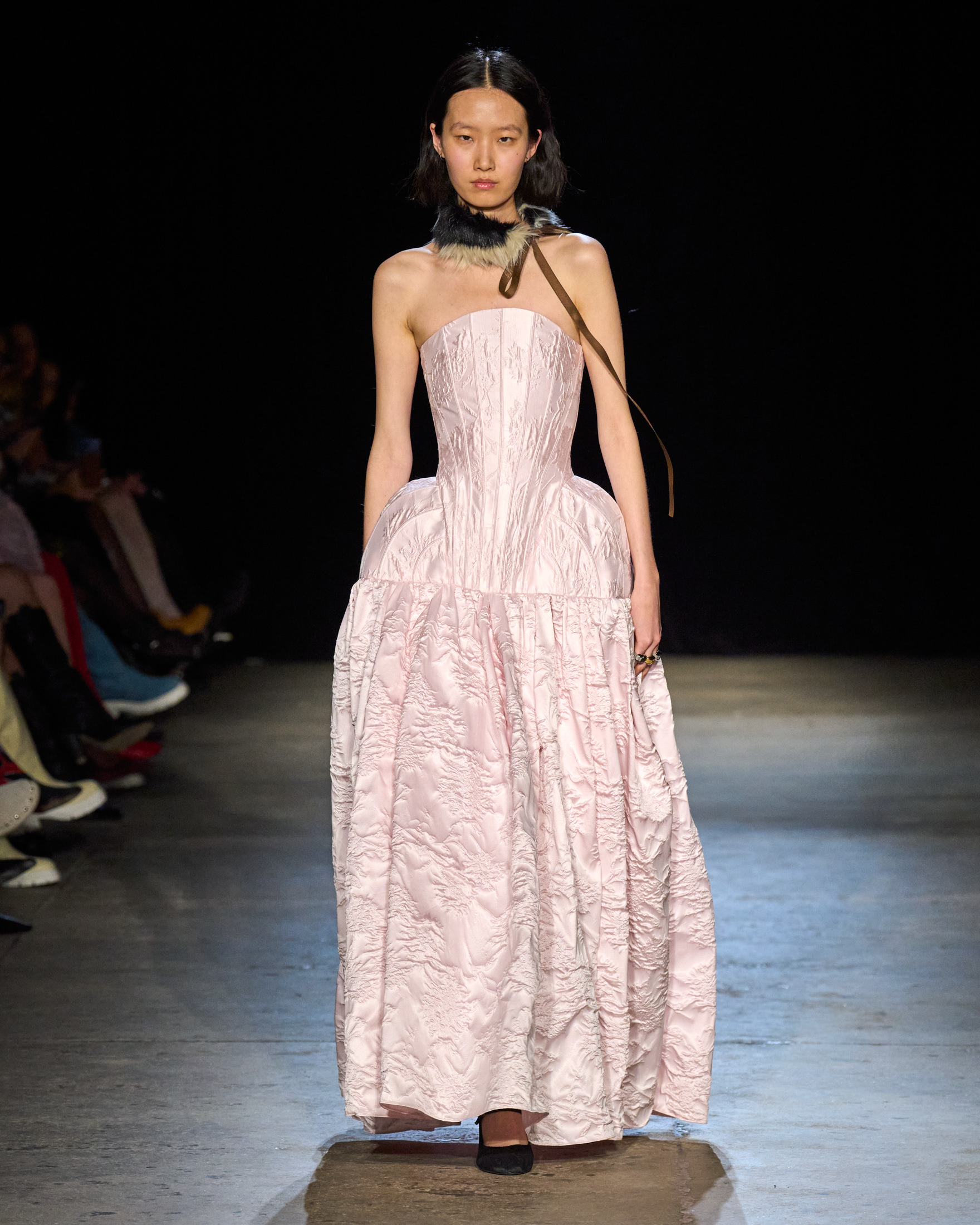

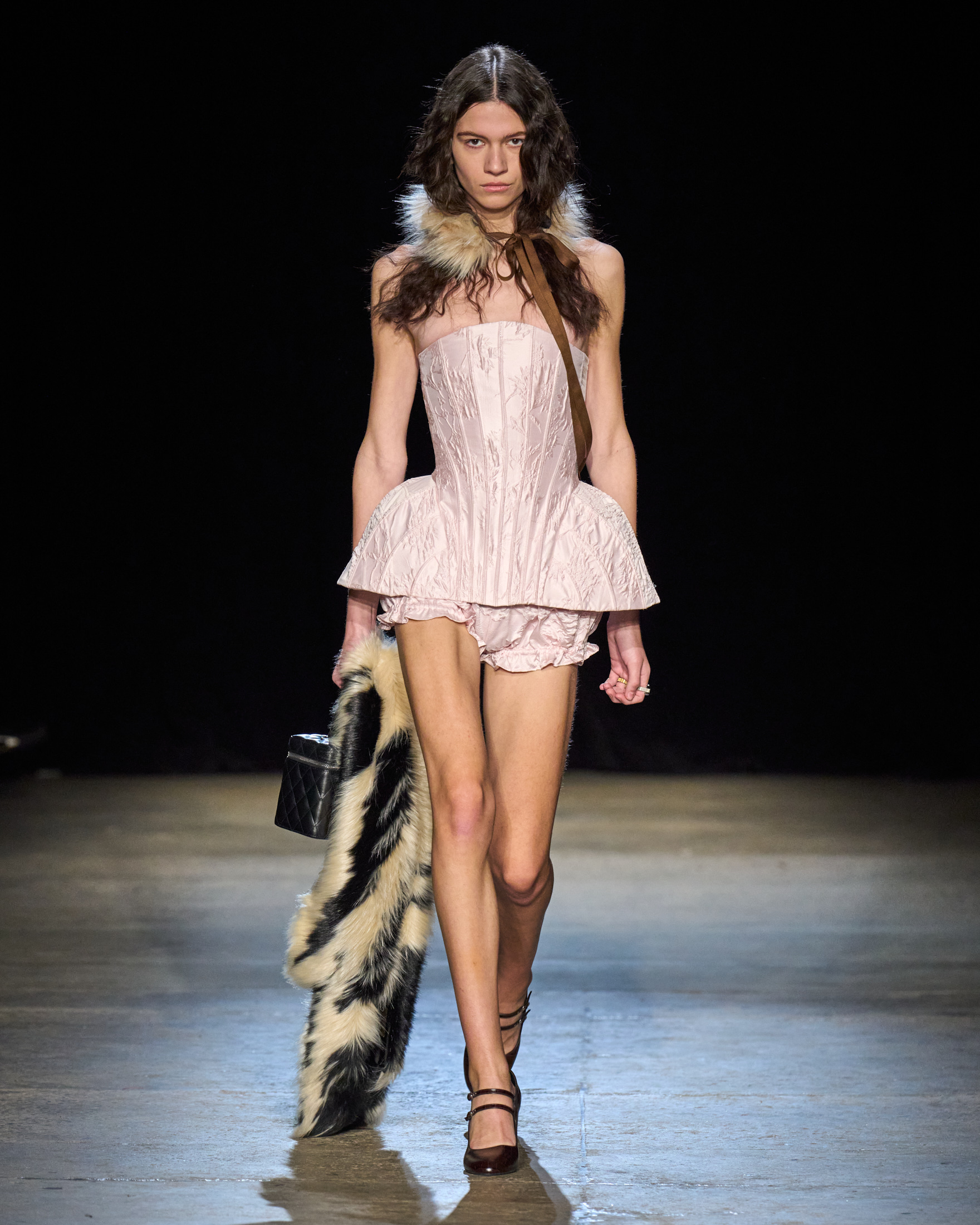
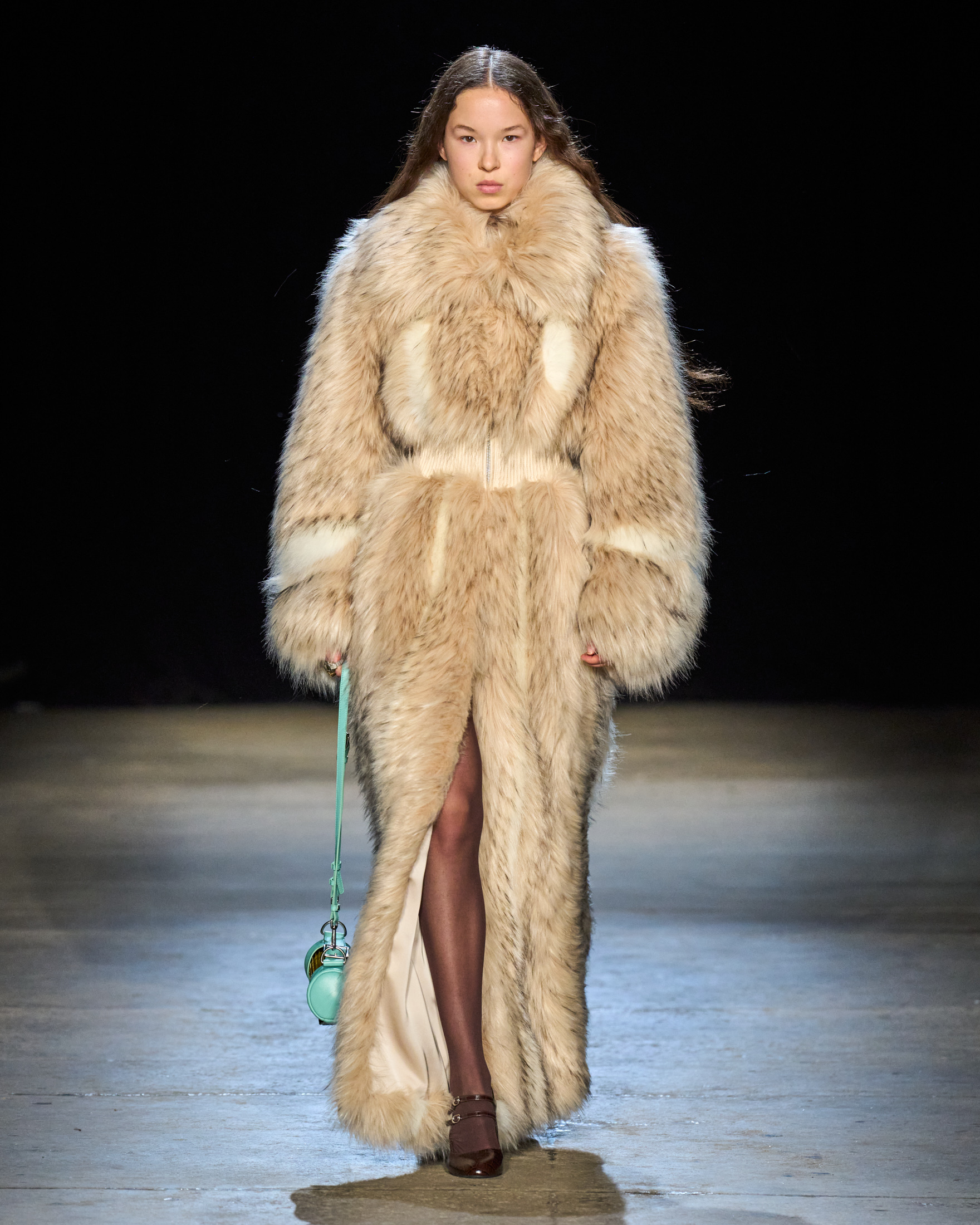
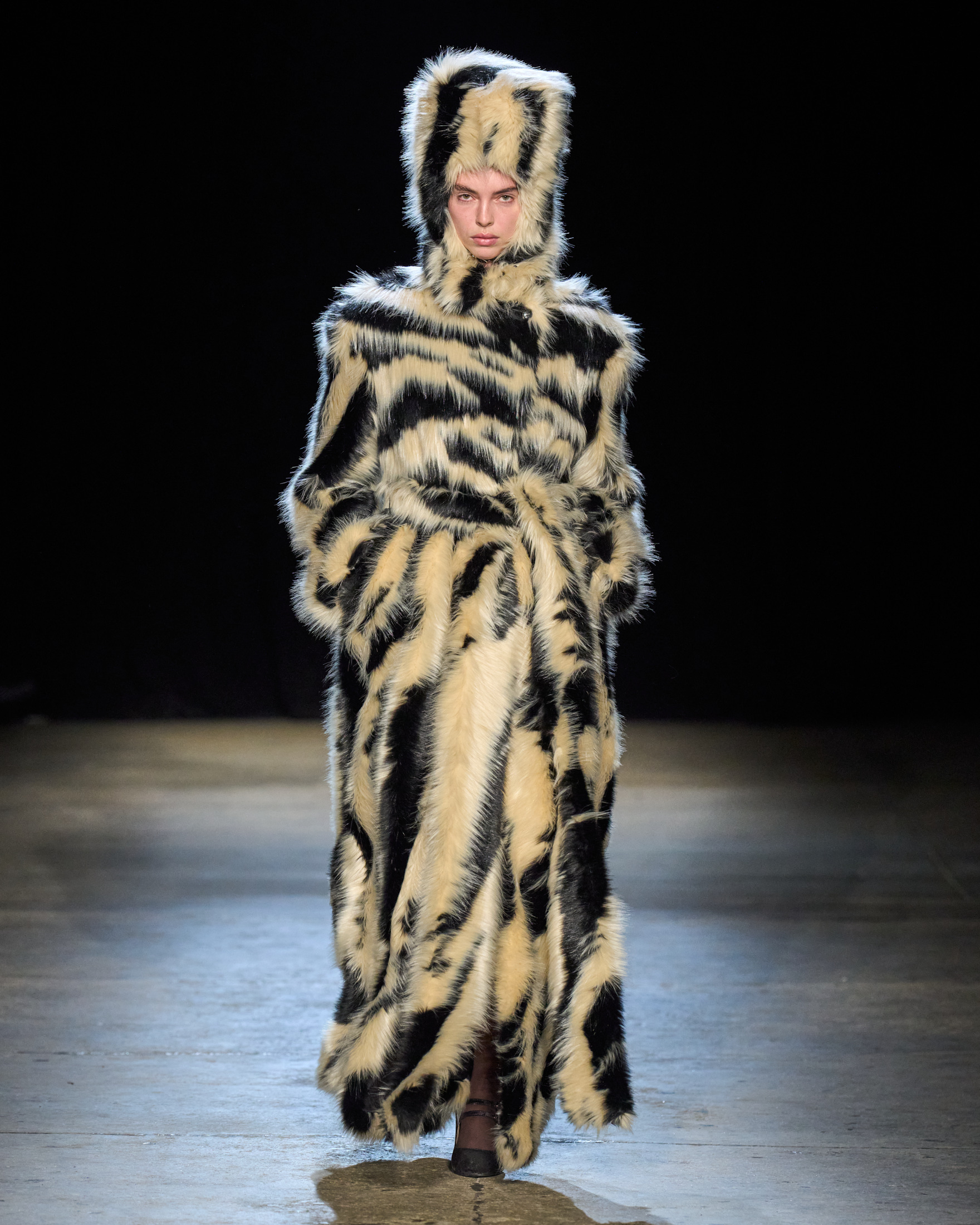
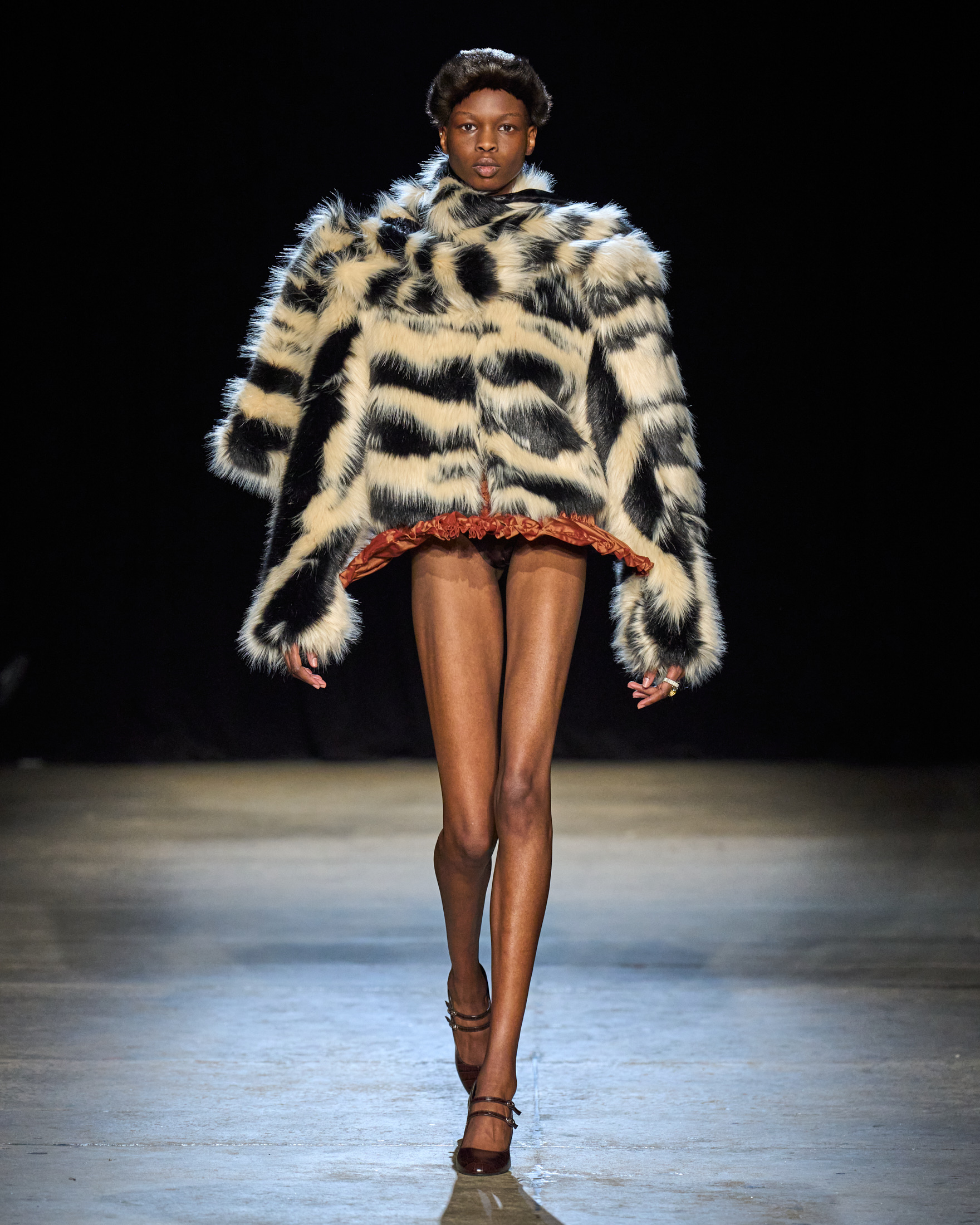

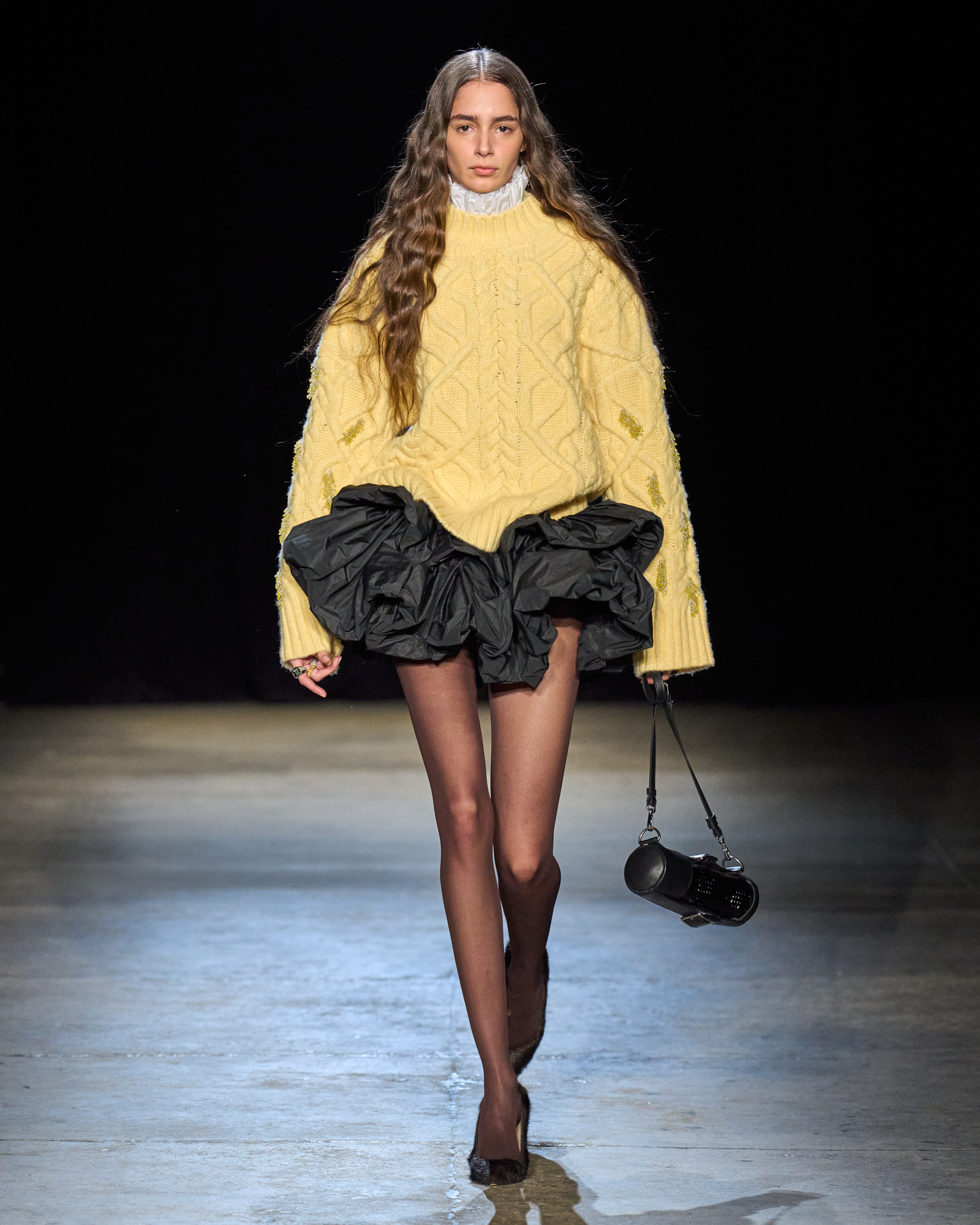
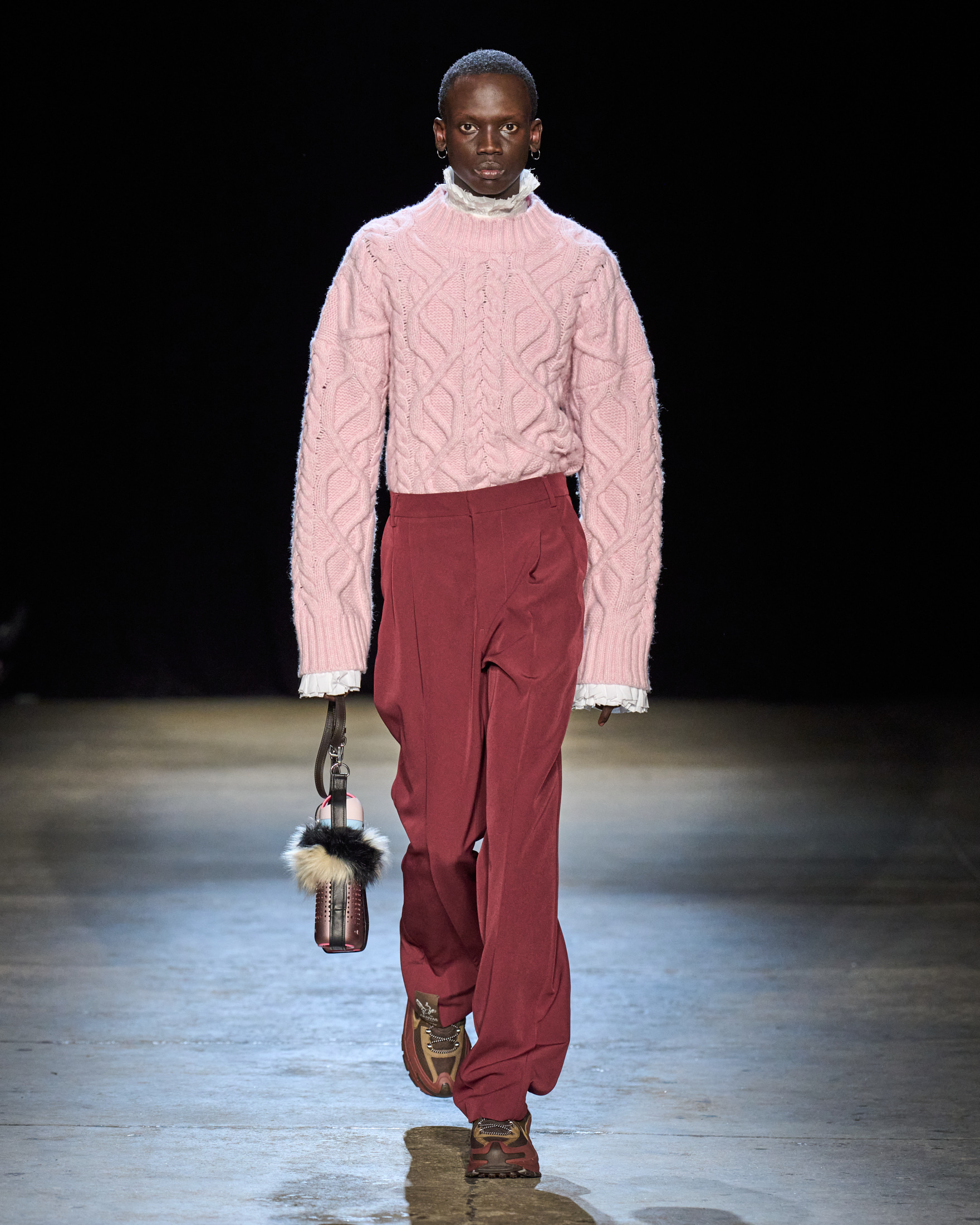
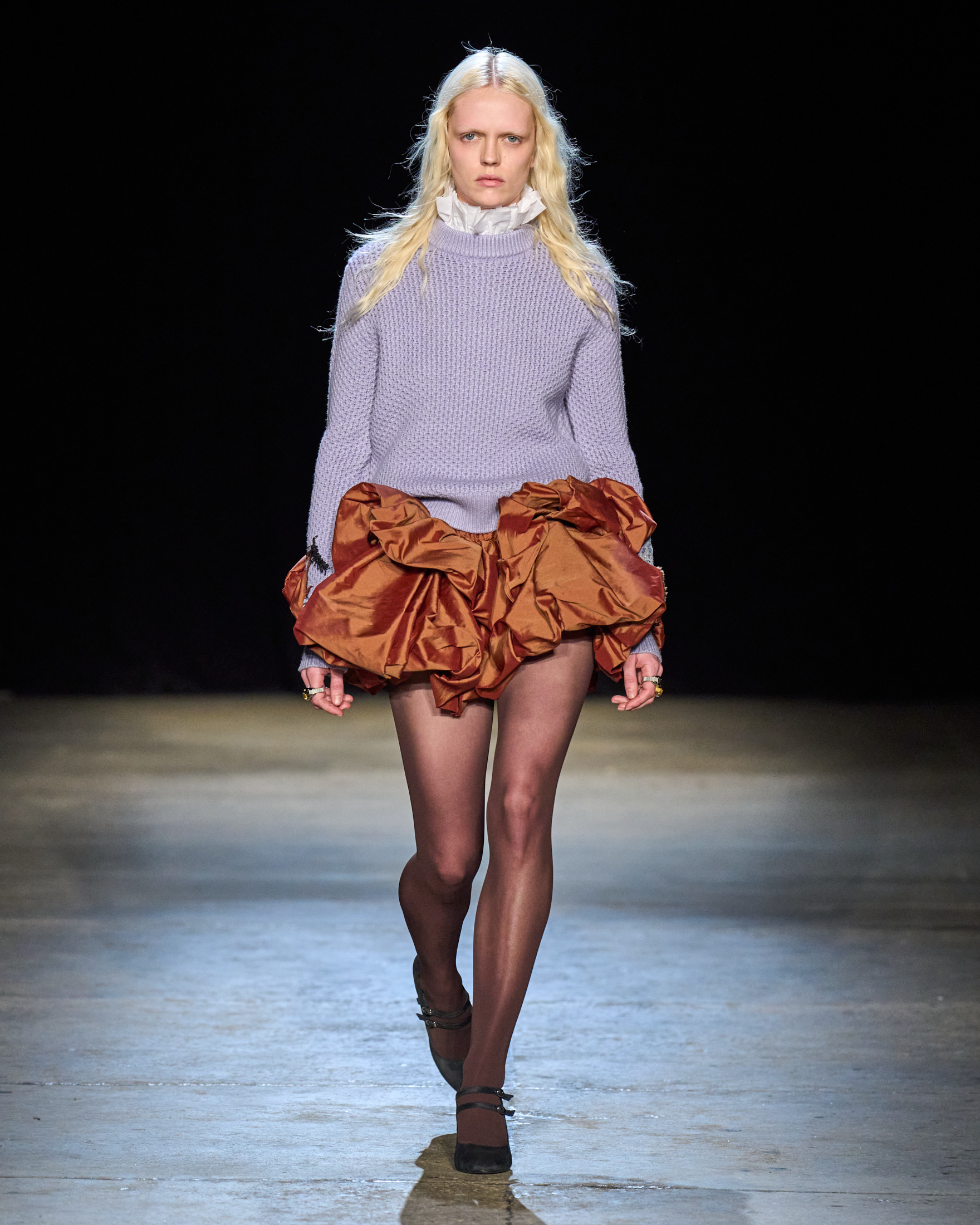
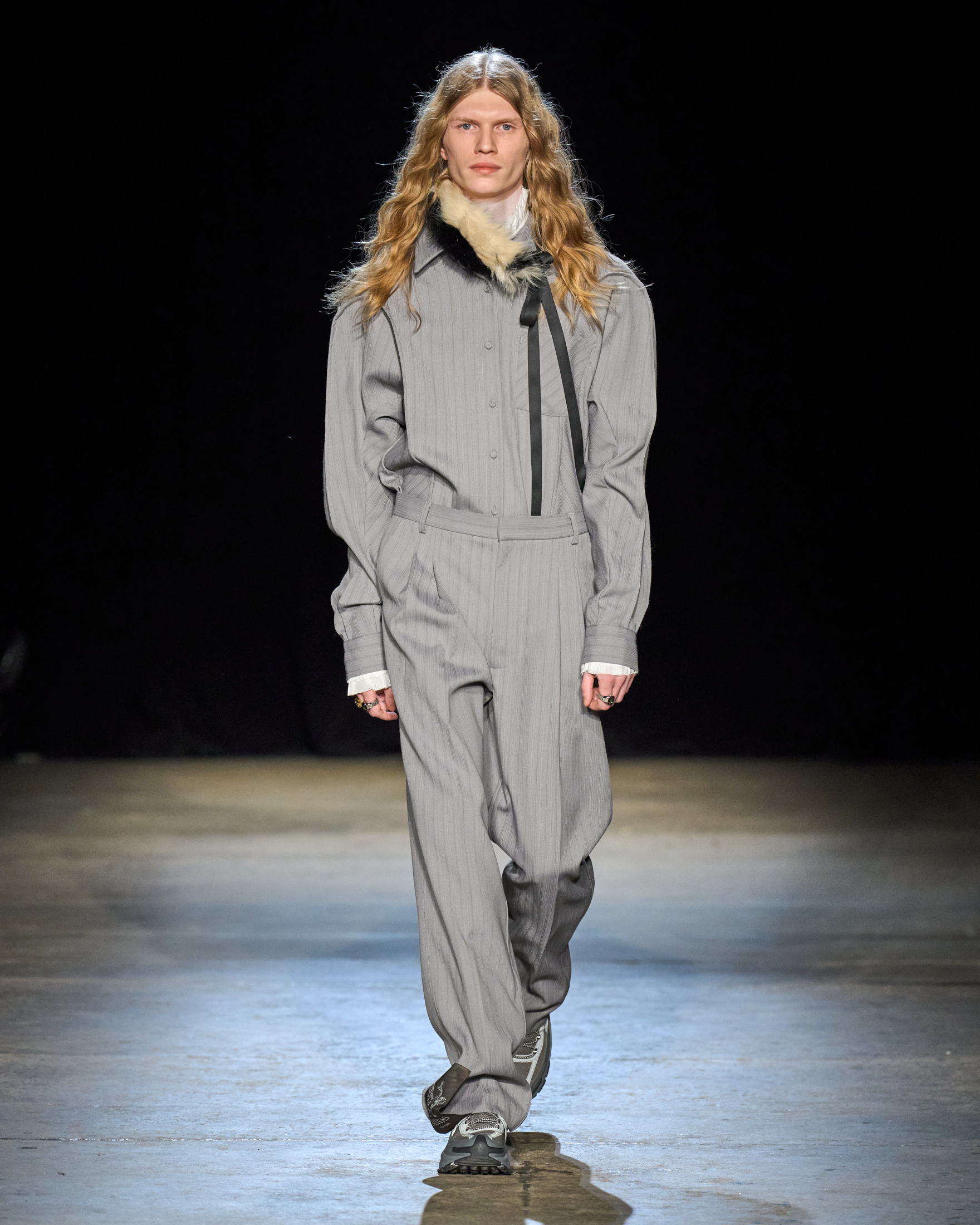

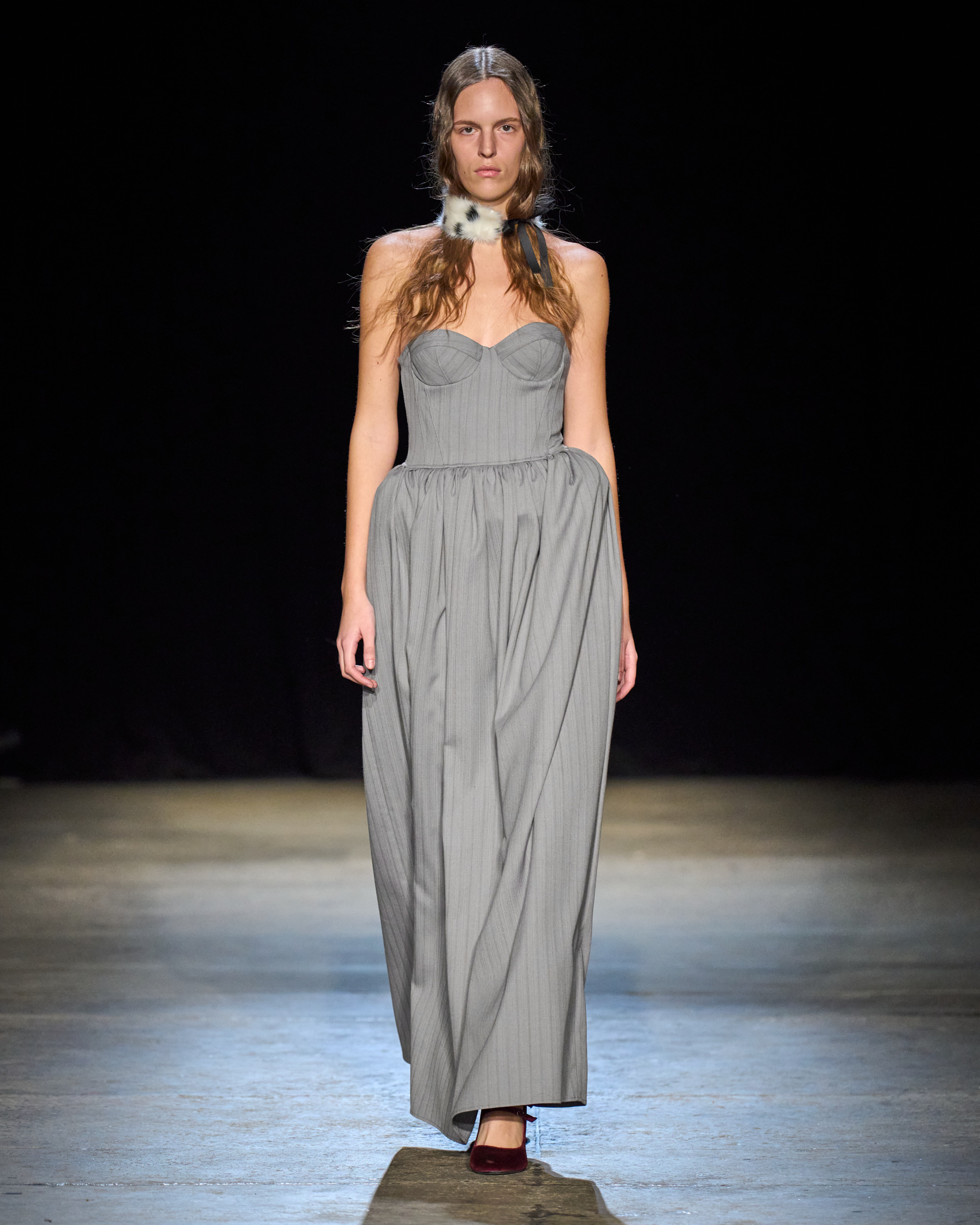
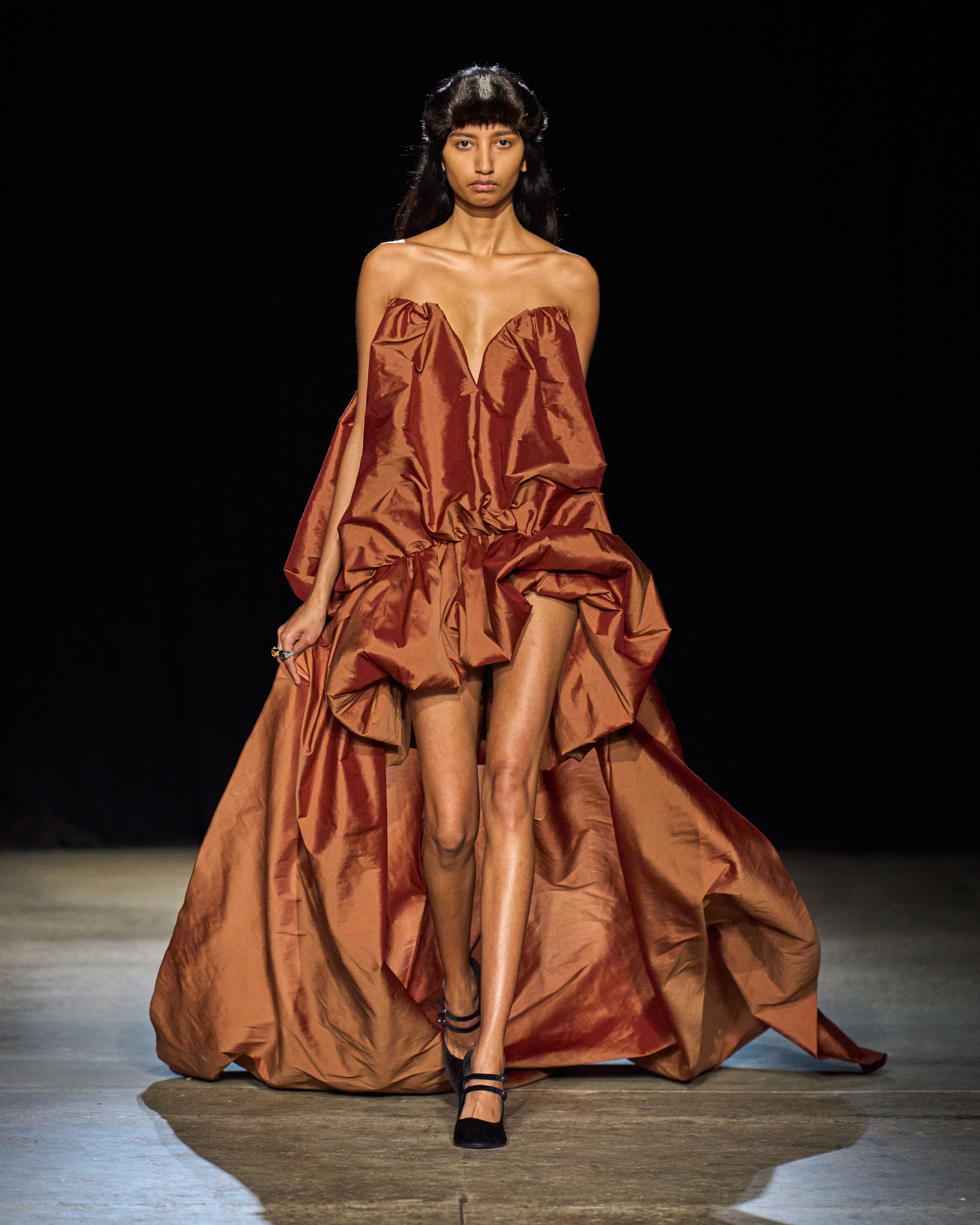
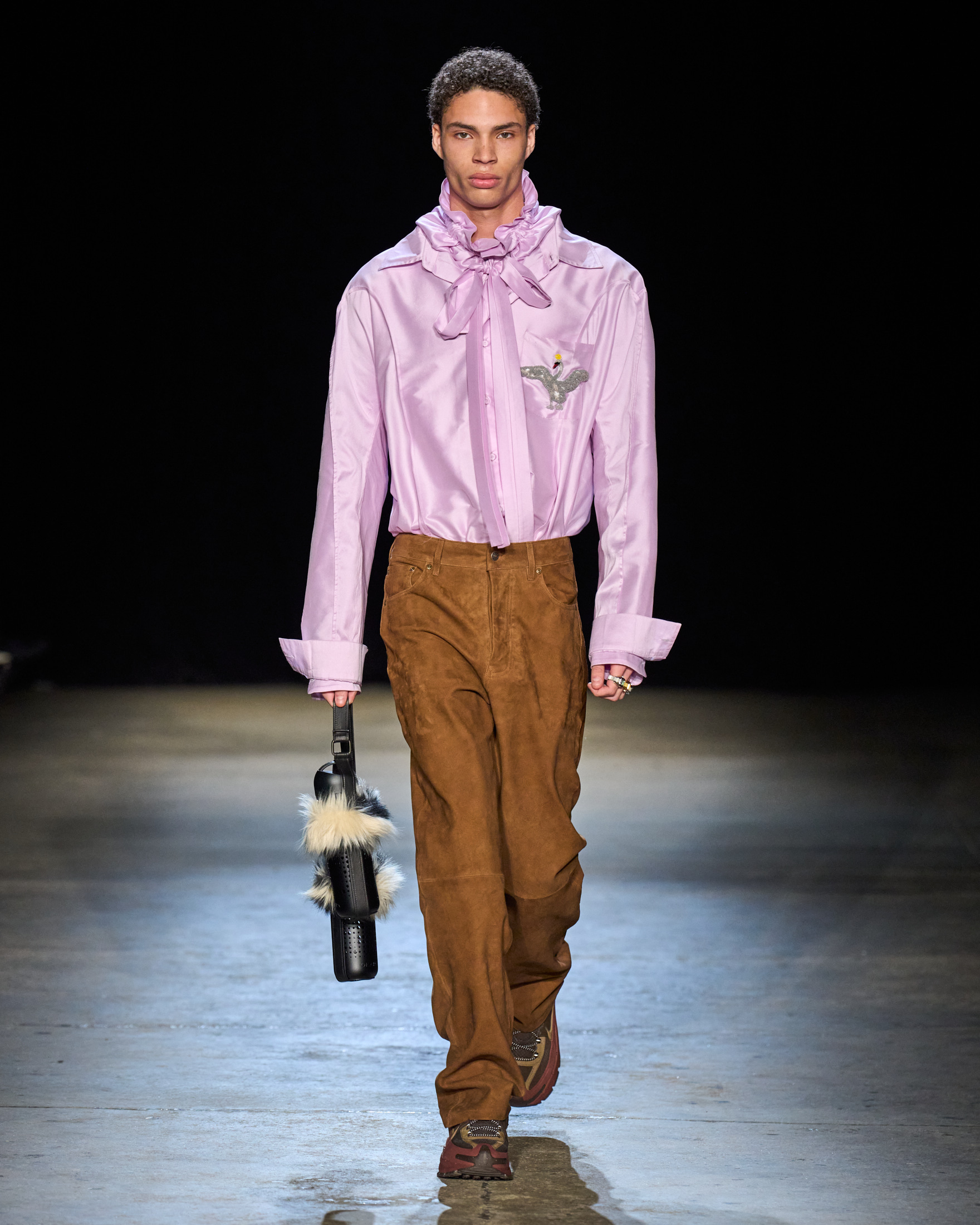
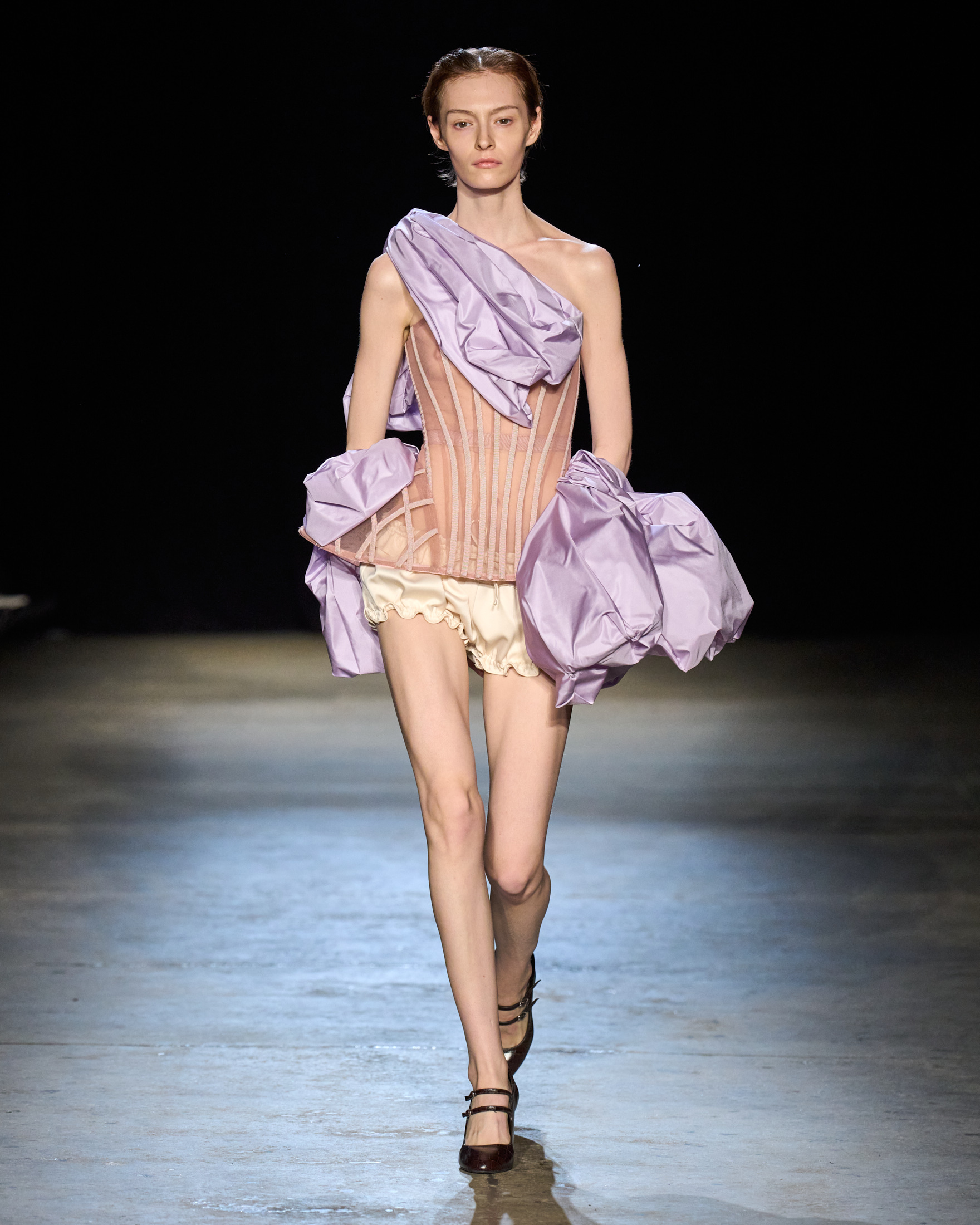
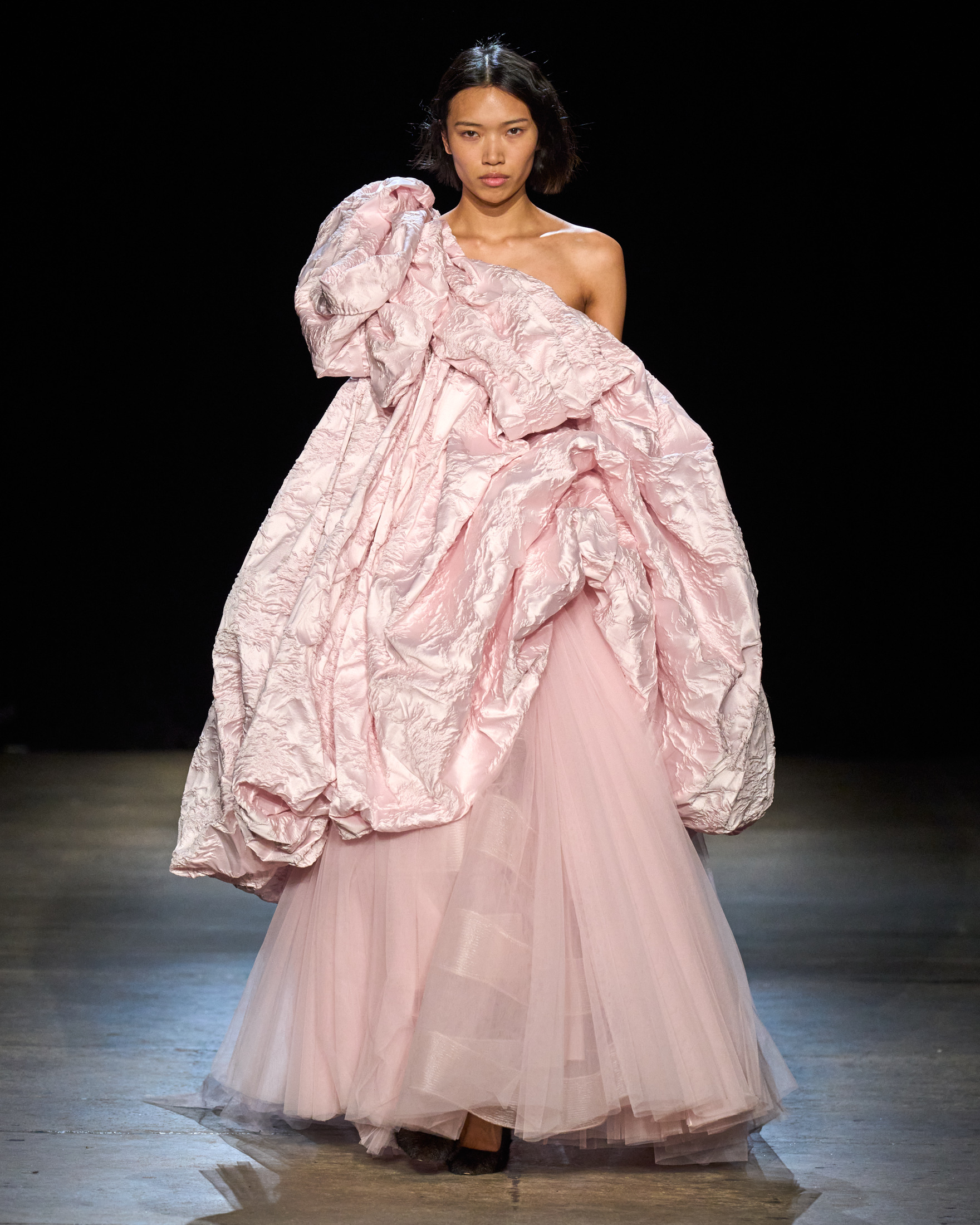
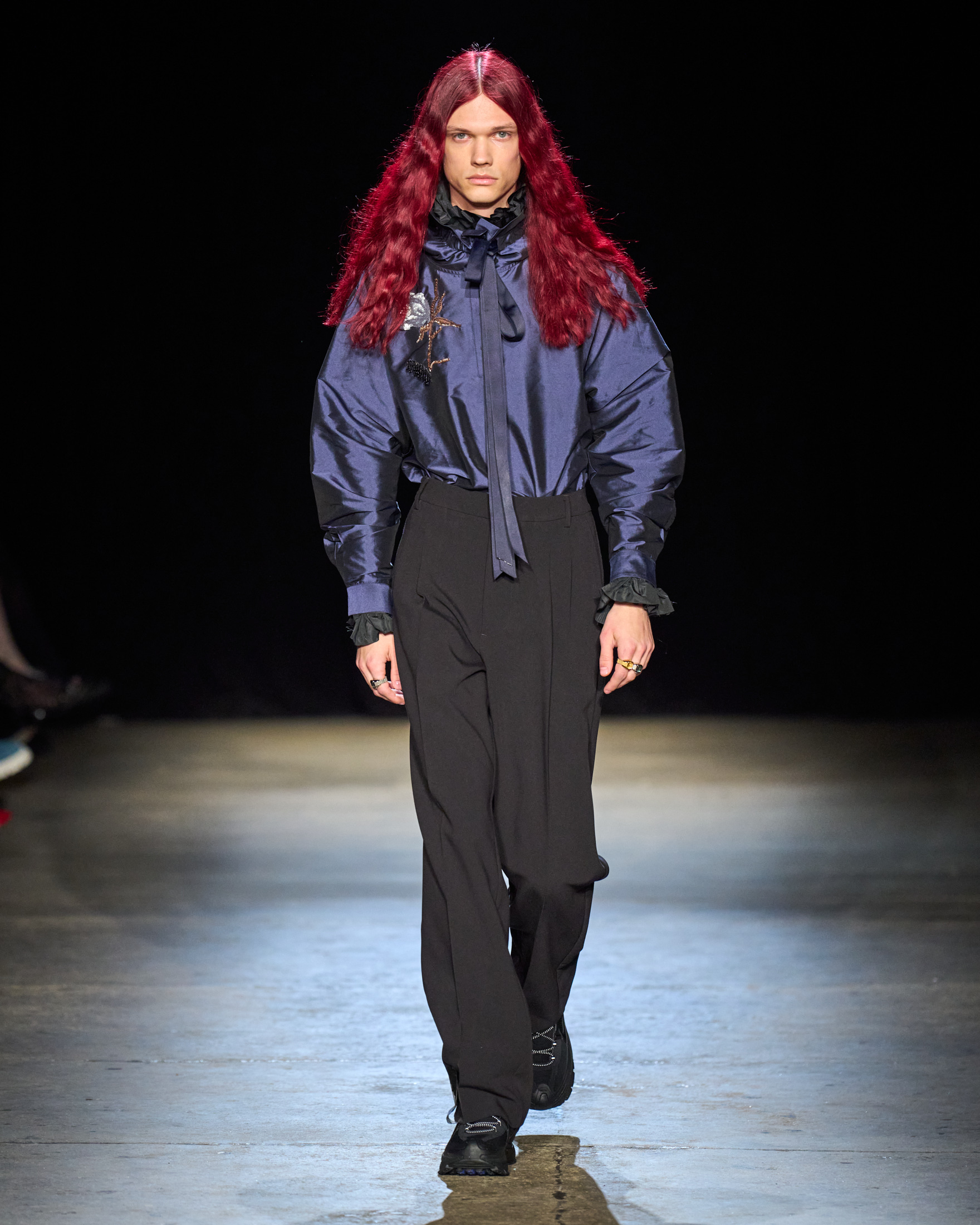


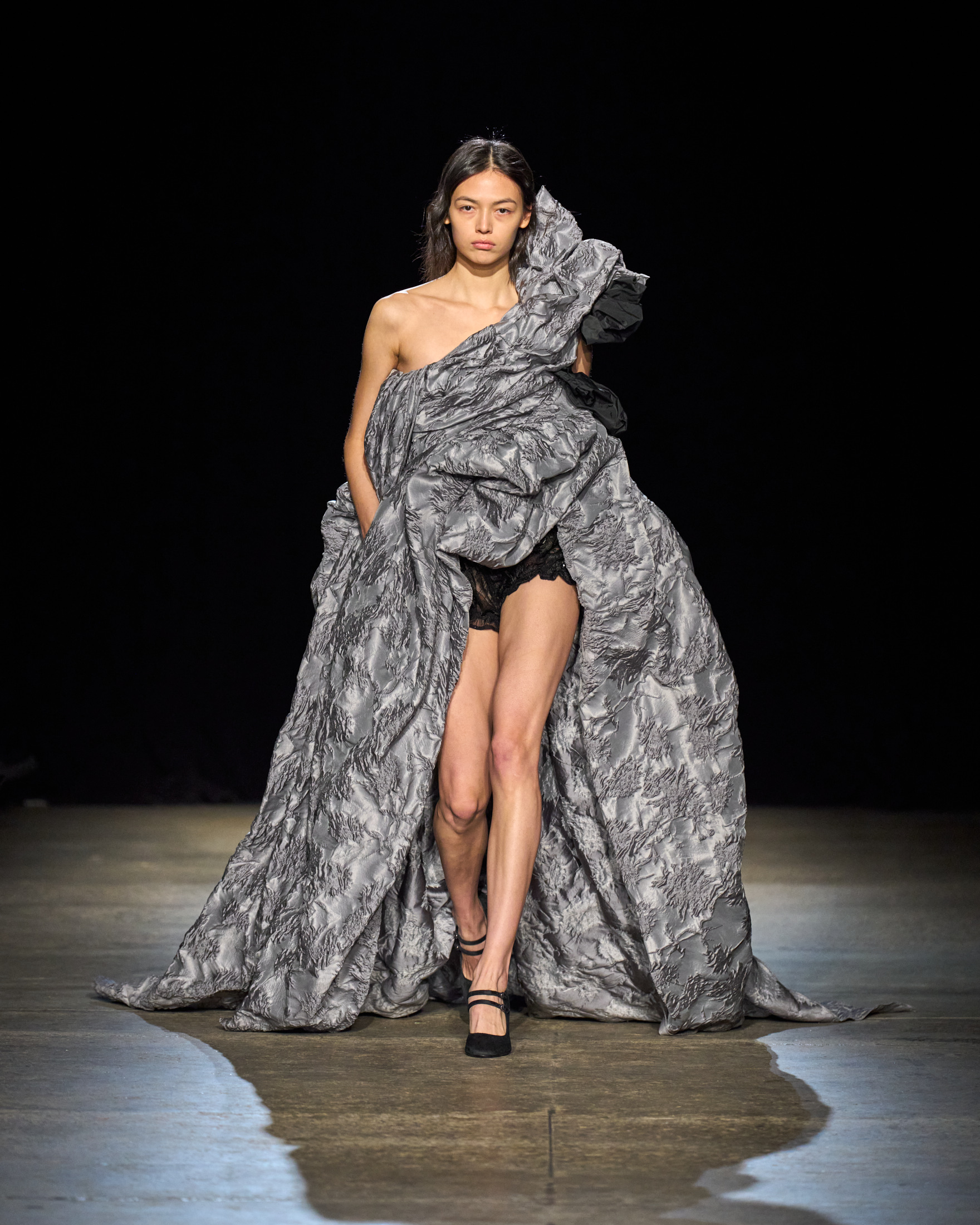
Inside New York Fashion Week, there are shows that feel like appointments — and then there are shows that feel like sealed rooms you’re lucky to enter. The Fall 2026 presentation from AKNVAS was firmly the latter. Staged in the former studio of legendary photographer Annie Leibovitz, the setting alone carried a sense of creative residue: high ceilings, ghostly light, and an intimacy that made every footstep and fabric movement feel amplified.
The guest list mirrored the mood. Influencers and editors packed shoulder to shoulder, many already dressed in past-season AKNVAS pieces, creating a kind of living archive in the audience. Before a single model walked, the room already felt like an ecosystem devoted to the brand.
Designer Christian Juul Nielsen anchored the collection in the emotional architecture of The Snow Queen by Hans Christian Andersen, but what unfolded wasn’t costume or fantasy. It was a distilled translation of the fairy tale into something urban, sharp, and wearable — a three-act progression that read clearly even without the program notes.
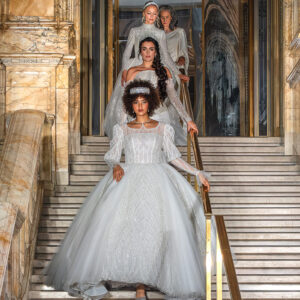
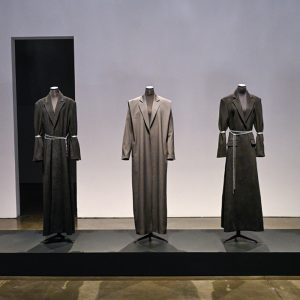
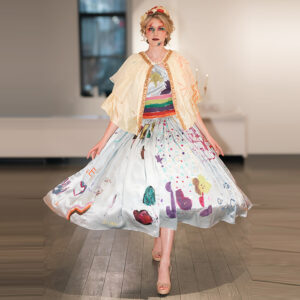
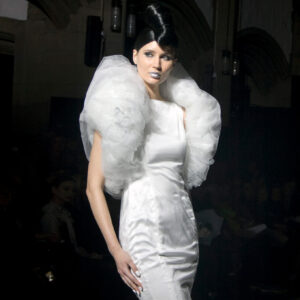
The opening act, “The Ice Palace,” arrived in glacial precision. Models floated through in sculptural silhouettes that felt ceremonial yet modern, with tailoring that read as architectural. Pale tones shimmered under the lights, and the knits — a Nielsen signature — clung and released in all the right places. There was a sense of emotional restraint in the clothes: elegance without warmth, beauty held at arm’s length. In the accompanying photos, you can see how the fabrics catch the light like frost, giving still images a kinetic chill.
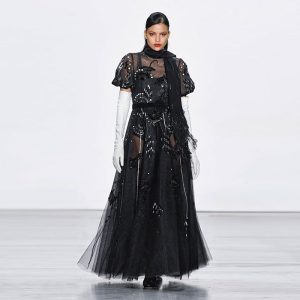
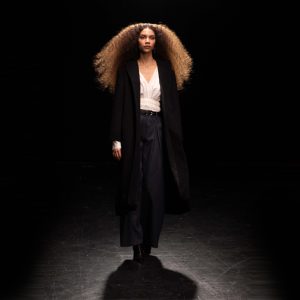
“The Traveler” softened the rigidity without abandoning discipline. Movement entered the garments — fluid drapes, layered textures, and shapes that hinted at vulnerability beneath structure. The color palette remained icy but gained dimension, as if dawn were breaking across a frozen surface. Watching from the front row, you could feel the tension between control and release, a push-pull that made the middle act the emotional hinge of the show.
By the time the section entitled “Teardrops” arrived, the collection exhaled. Subtle shine, softened tailoring, and more tactile surfaces introduced warmth without sentimentality. Nielsen’s background — sharpened during his time at Dior and Oscar de la Renta — revealed itself in the finishing. Every seam felt intentional; every embellishment had purpose. These weren’t decorative tears. They were structural, integrated, grown from the garments themselves.
Even the partnerships folded cleanly into the narrative. Okapa water bottles lined the seating in a palette that matched the set, while beauty looks from Moart and Uberliss kept faces polished but restrained — skin luminous, hair controlled, nothing distracting from the clothes. It reinforced the show’s thesis: emotion emerging through discipline.
AKNVAS has built a reputation as a celebrity favorite — worn by everyone from Kylie Jenner to Ariana Grande — but in this room, the focus wasn’t star power. It was craft. The audience responded with a quiet attentiveness that’s rarer than applause. People leaned forward. Phones lowered. You could feel editors recalibrating expectations in real time.
Looking at the photos afterward, what’s striking is how faithfully they capture the atmosphere: the cool light, the poised silhouettes, the emotional arc stitched into the lineup. But being there added another layer — the hush between looks, the collective intake of breath as textures shifted, the sense that the collection wasn’t just shown, it was experienced.That’s the difference between watching fashion and witnessing it. This was definitively the latter.