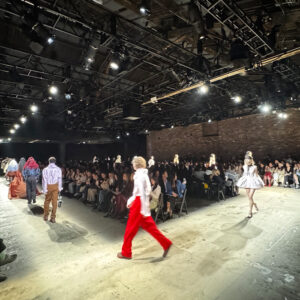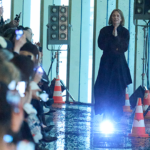




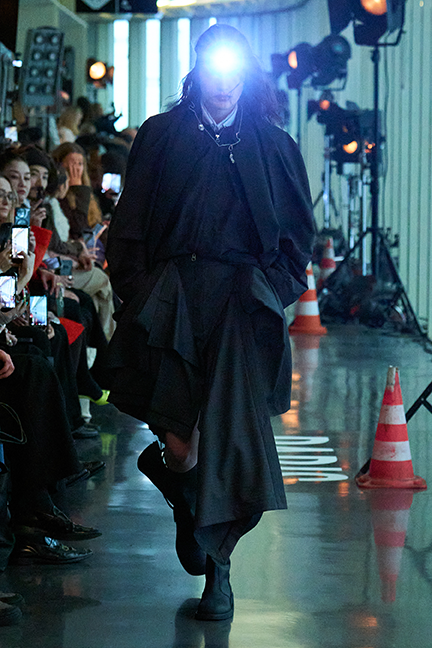
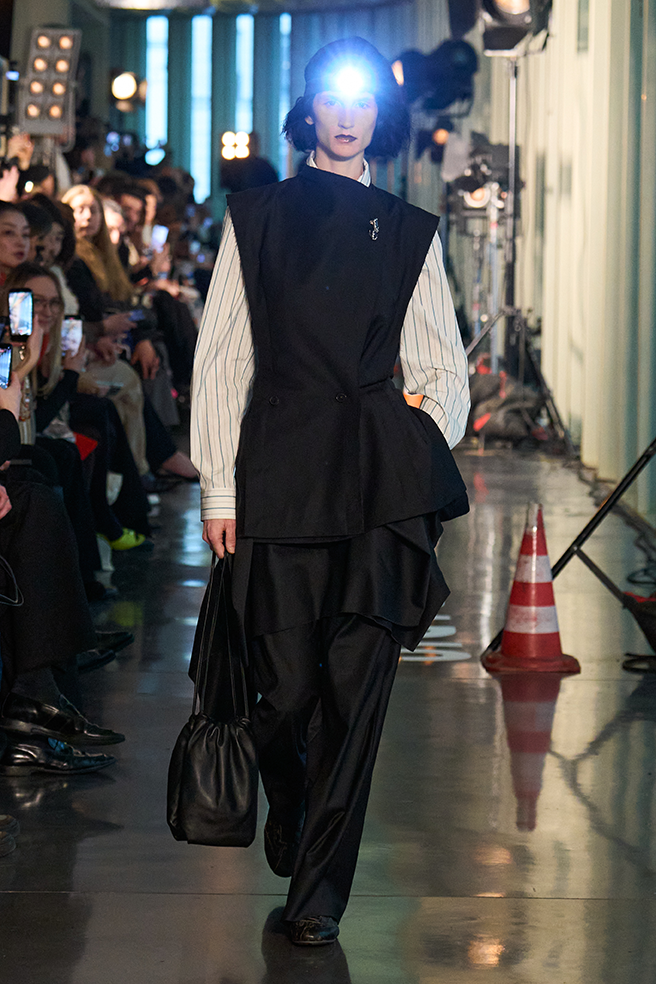
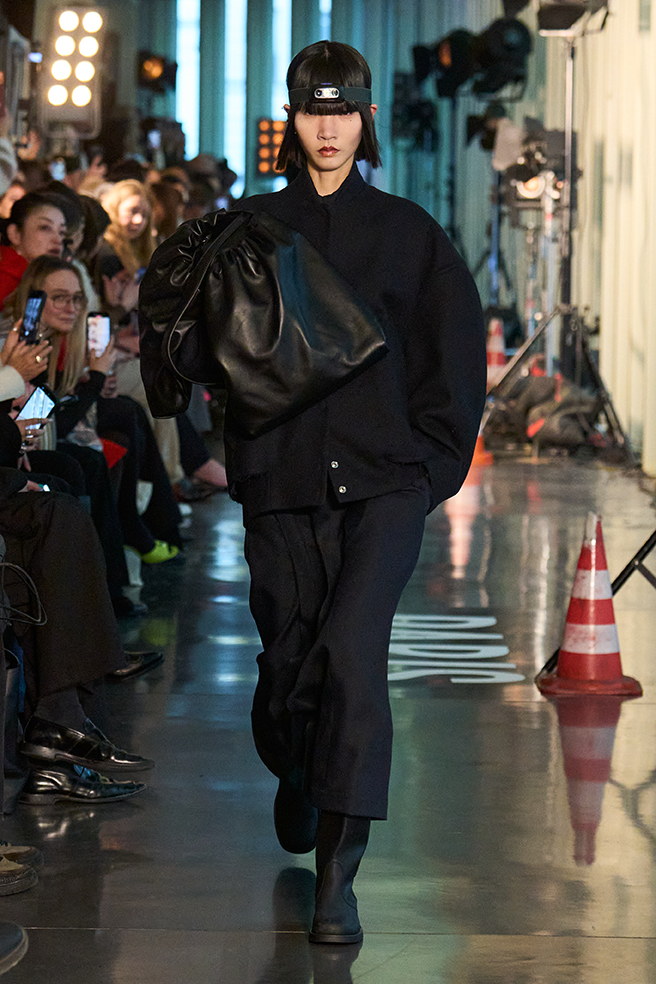
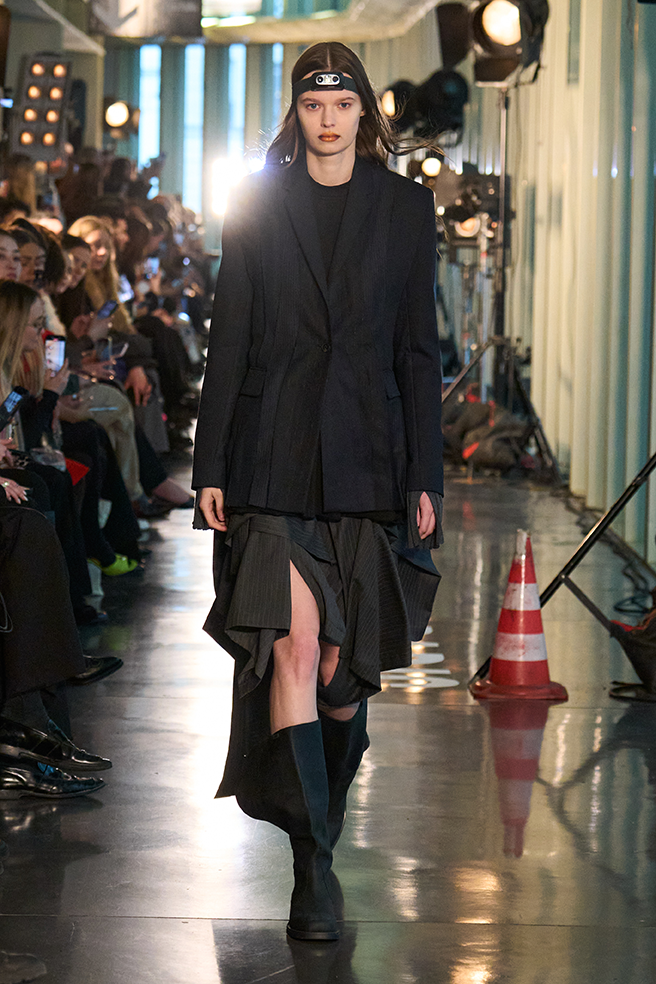
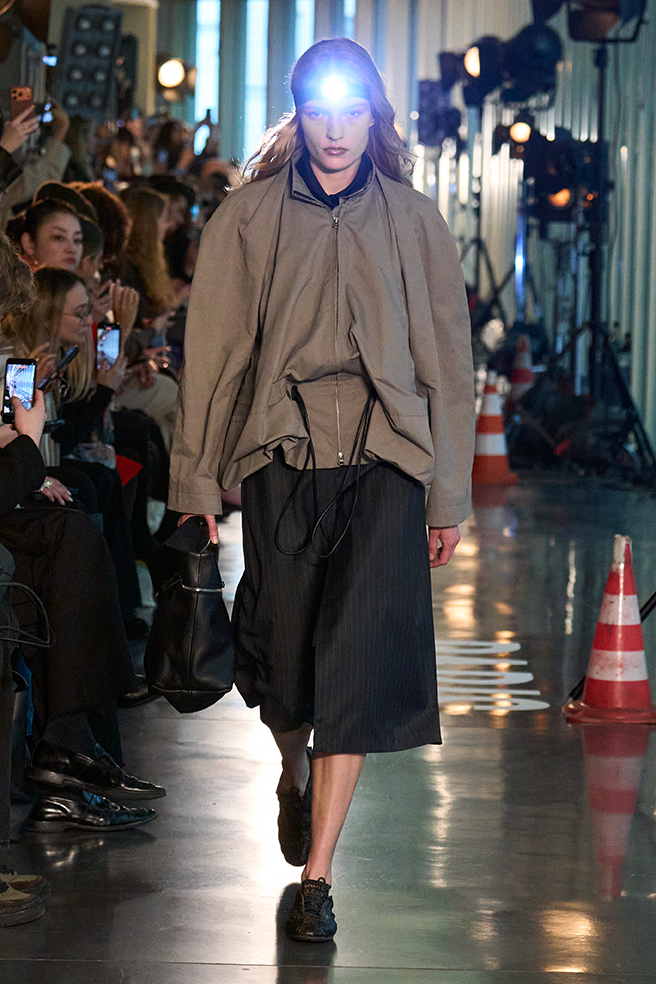
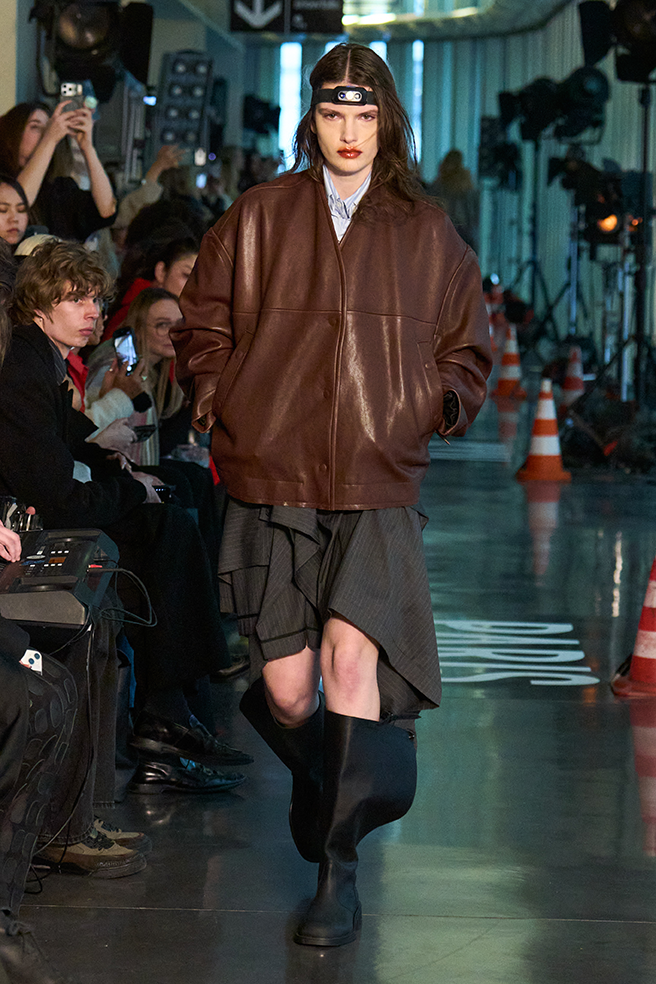
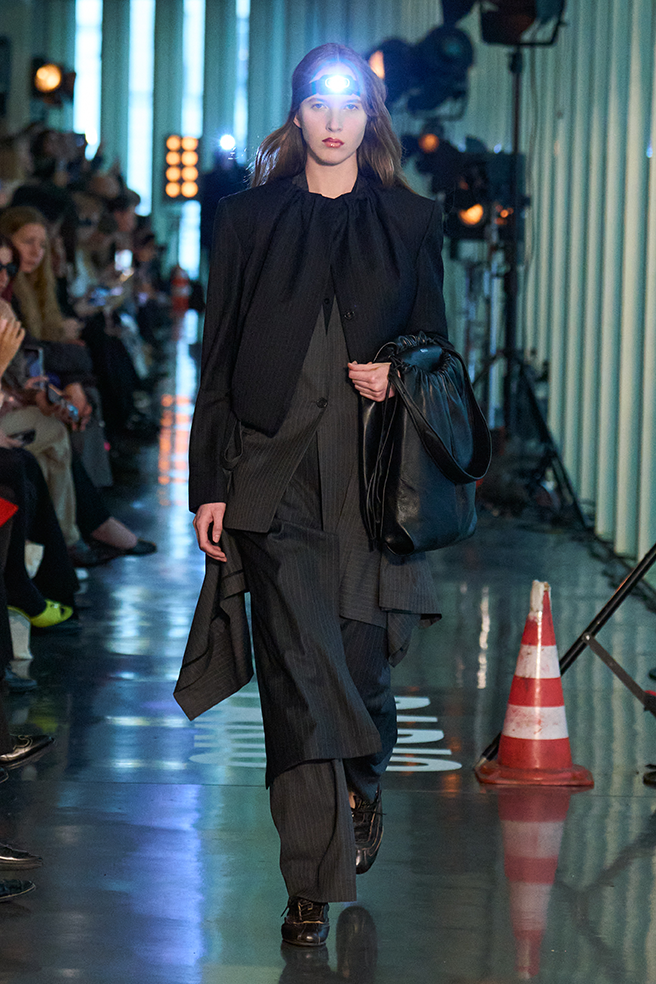
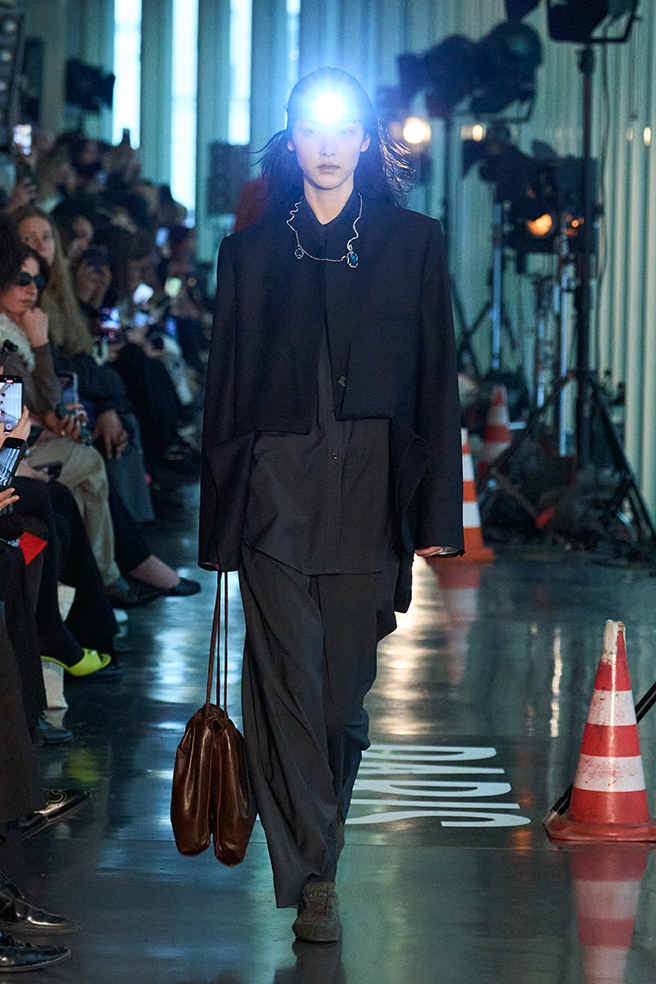
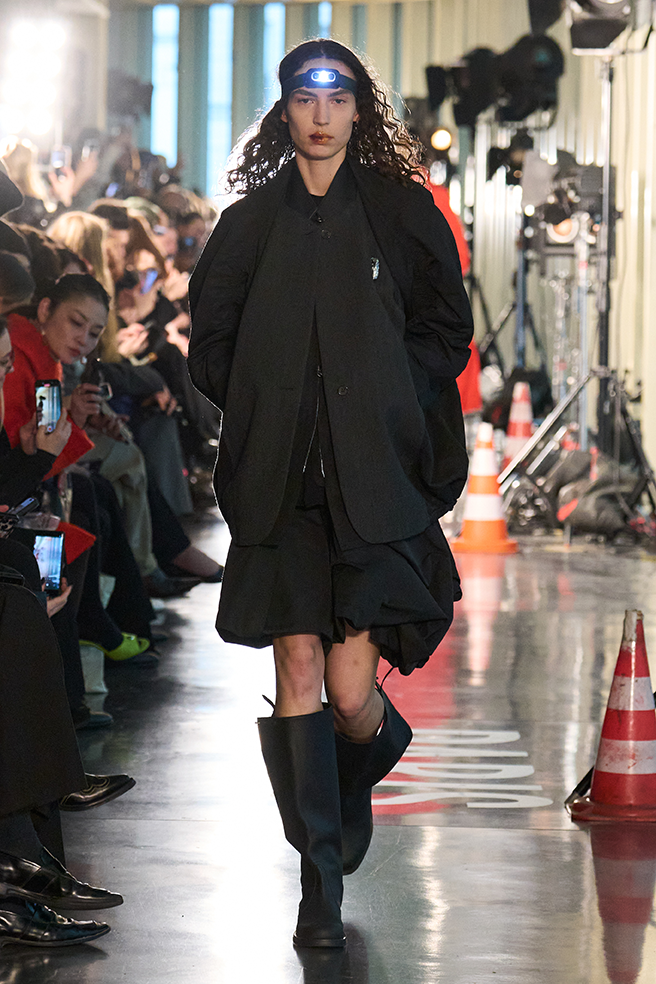
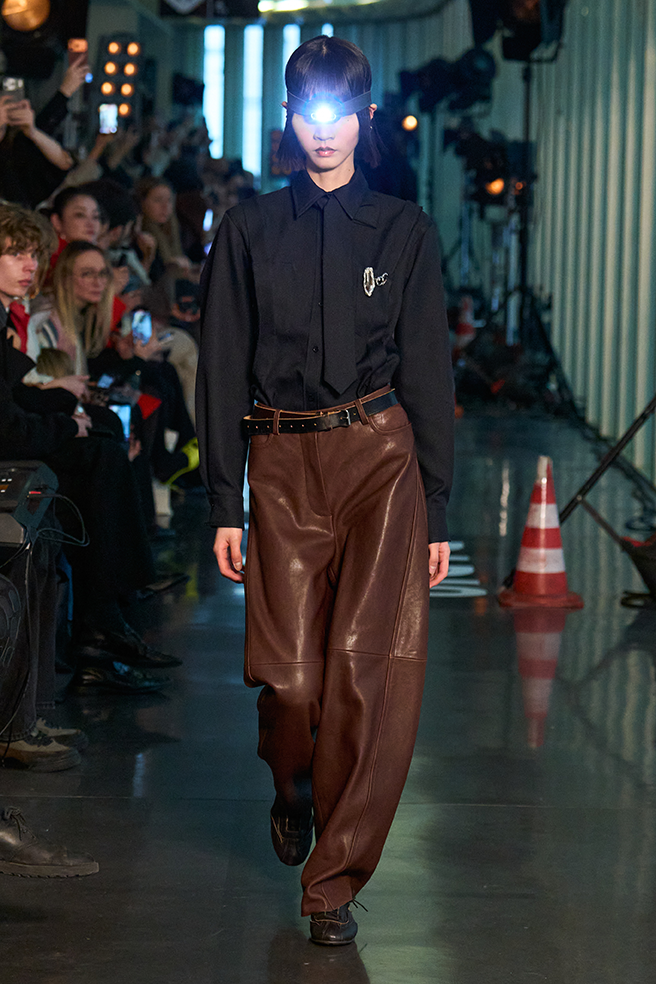
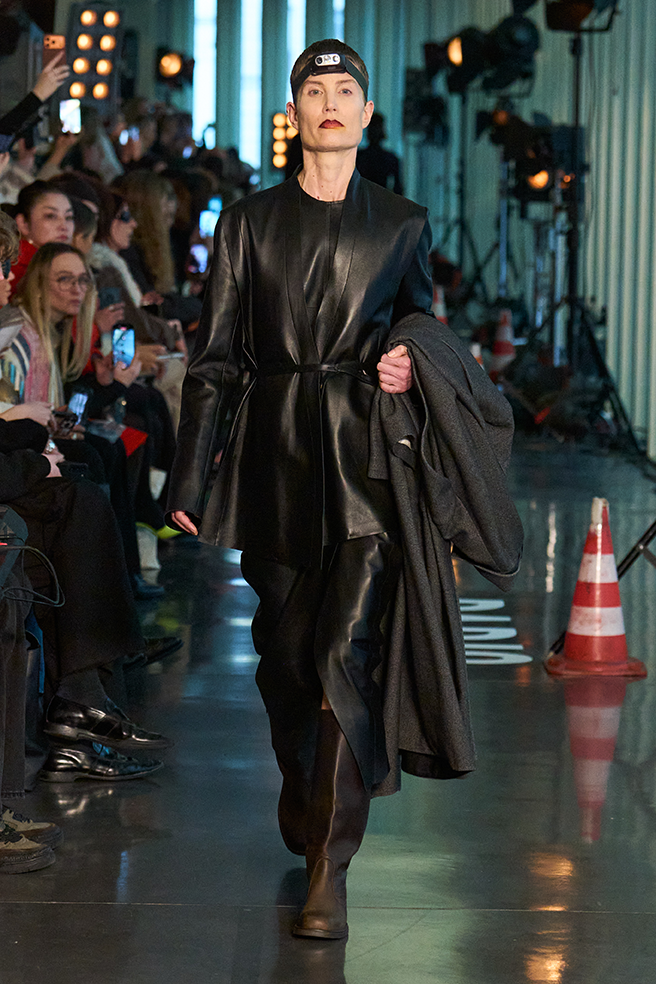
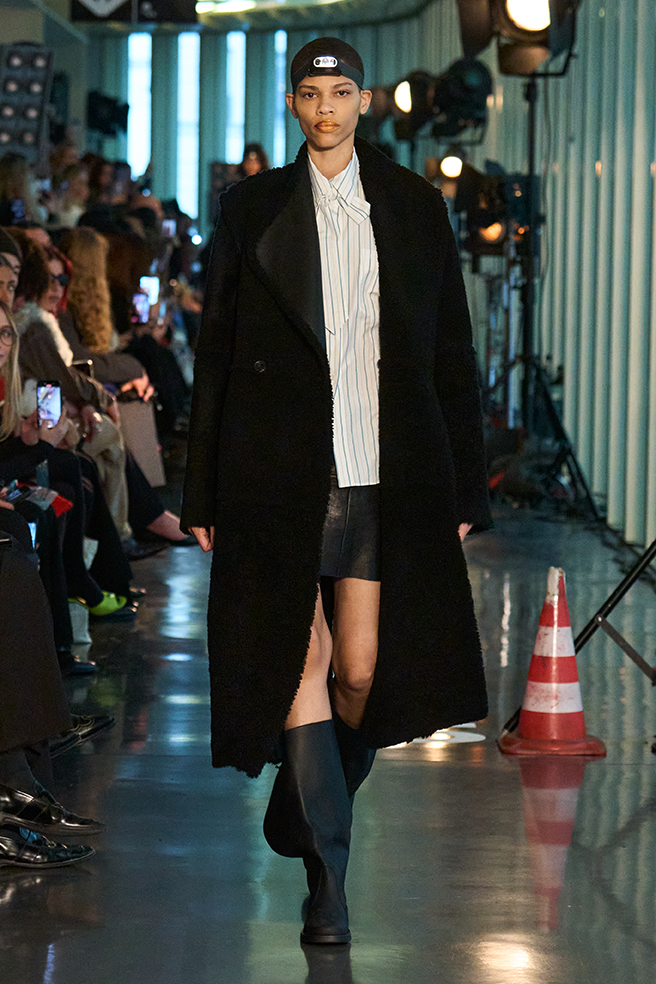
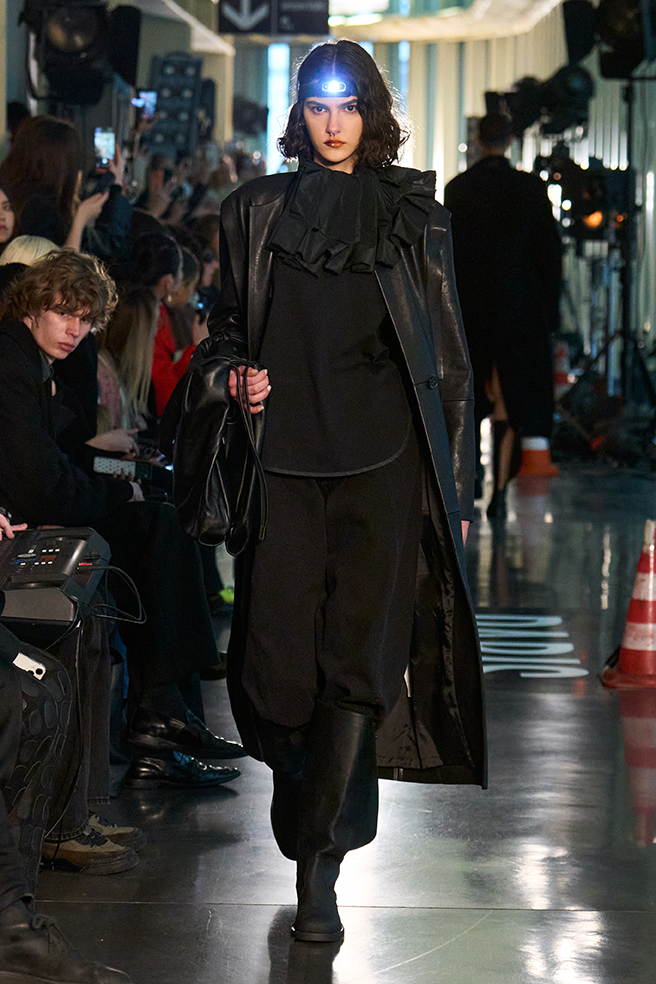
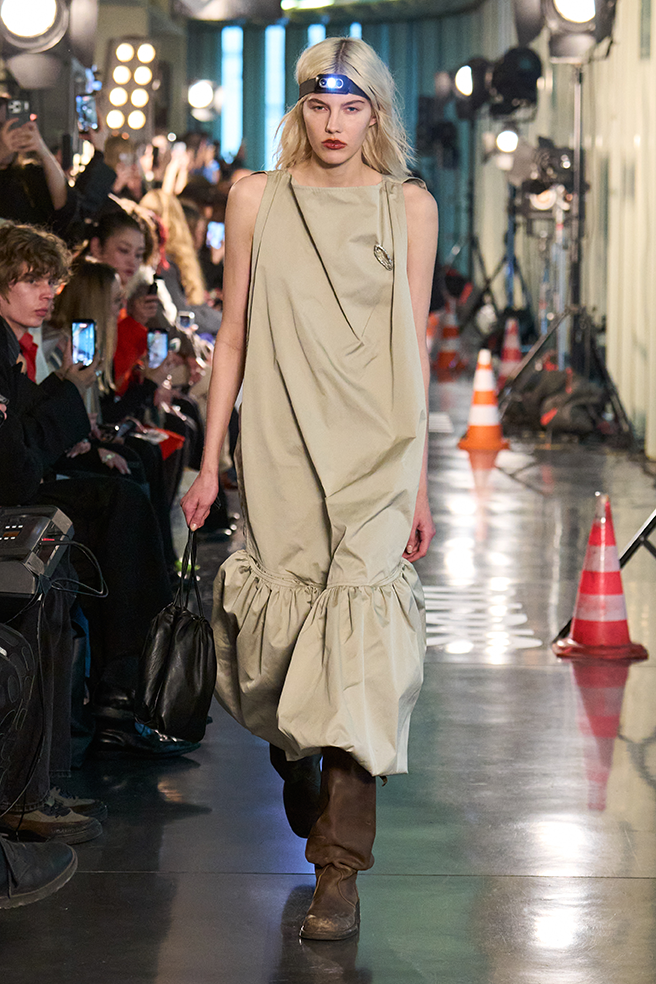
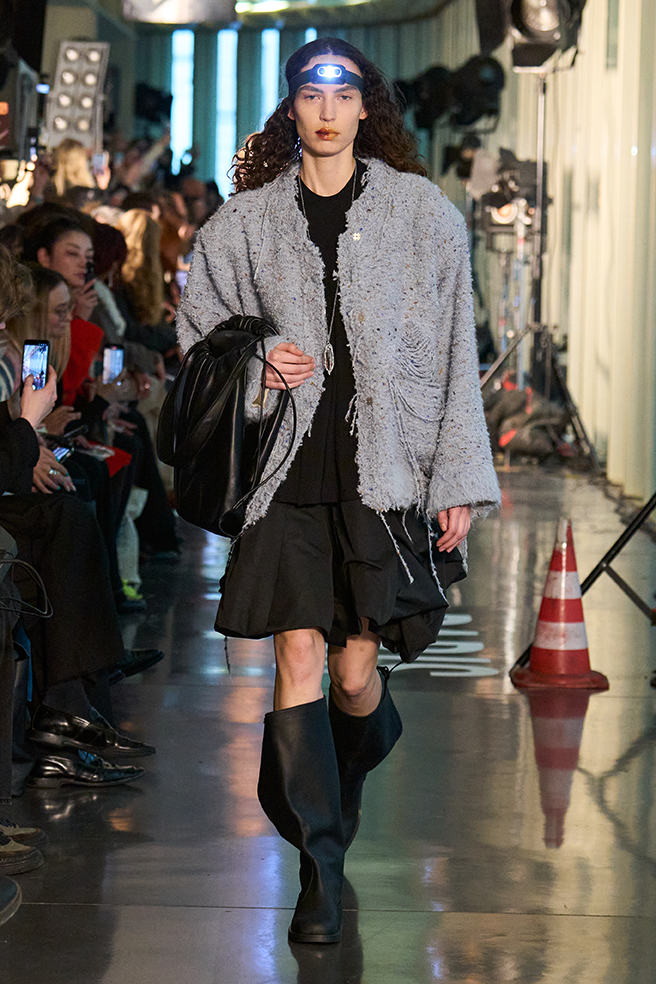
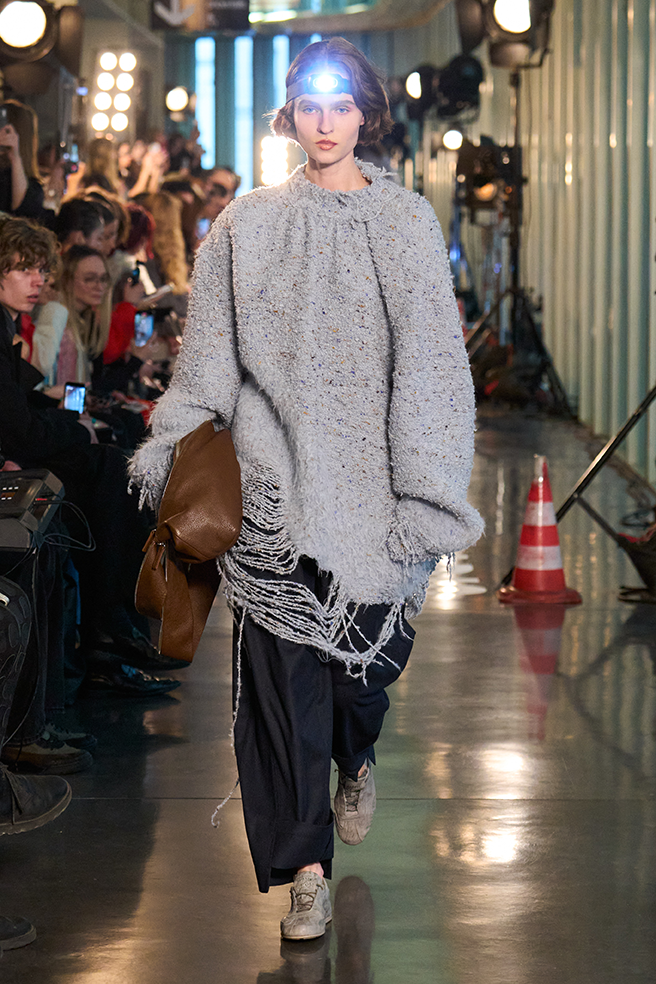
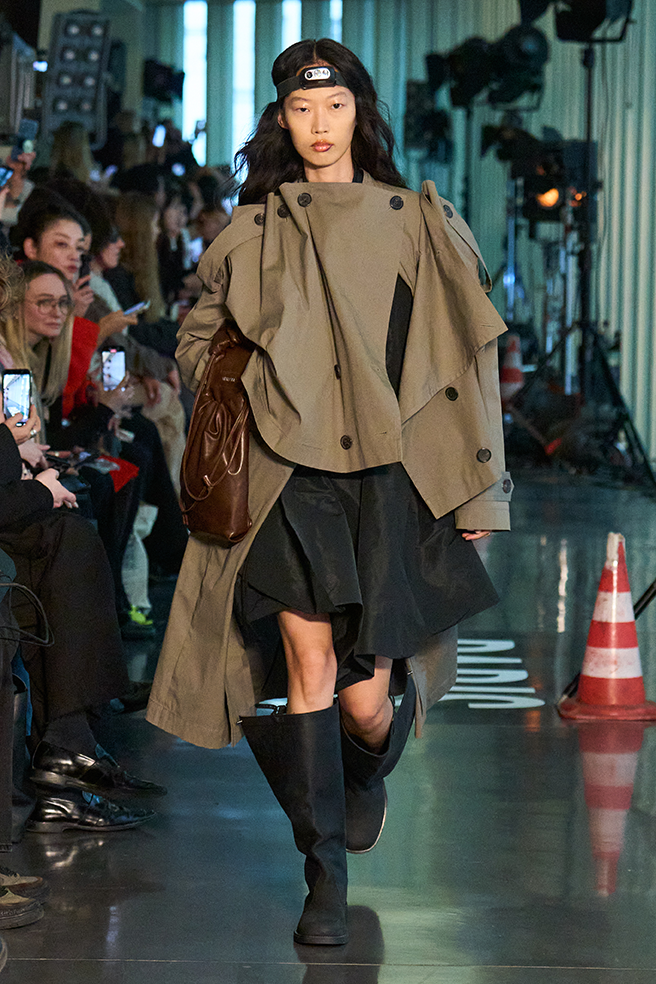
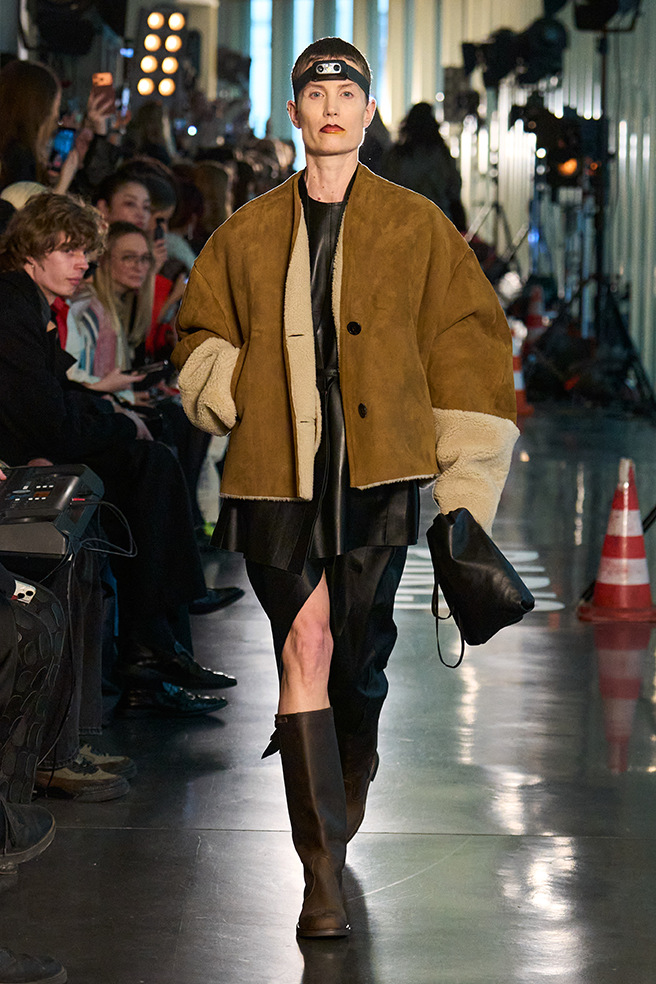
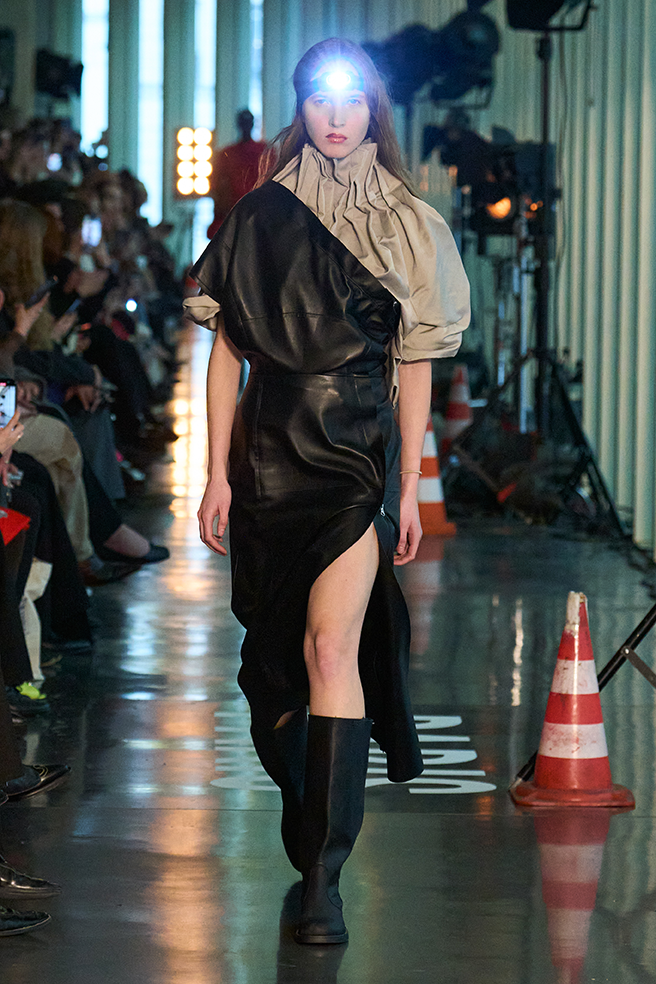
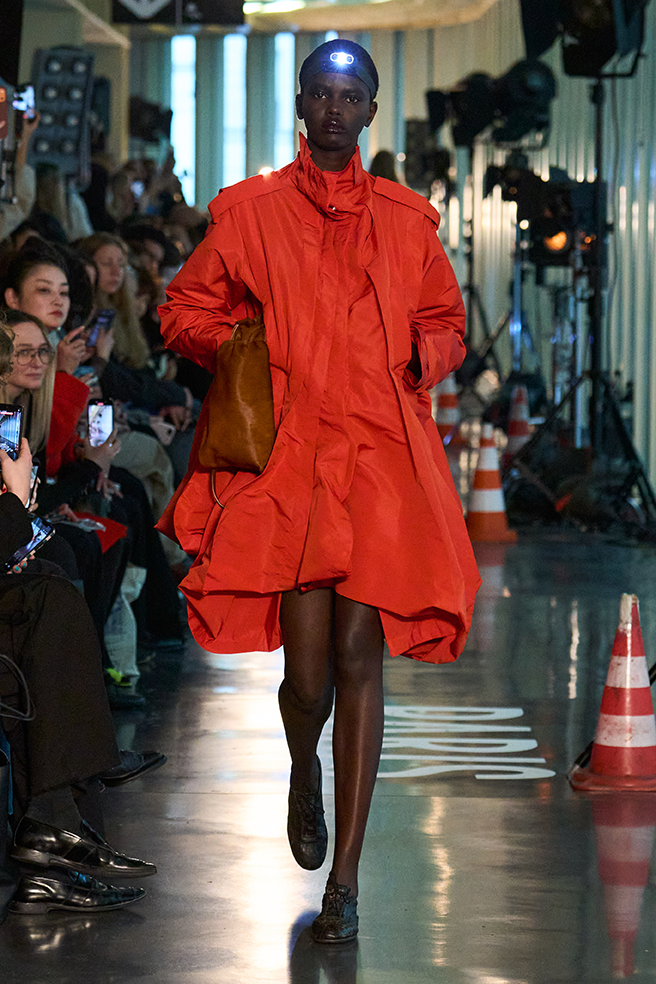
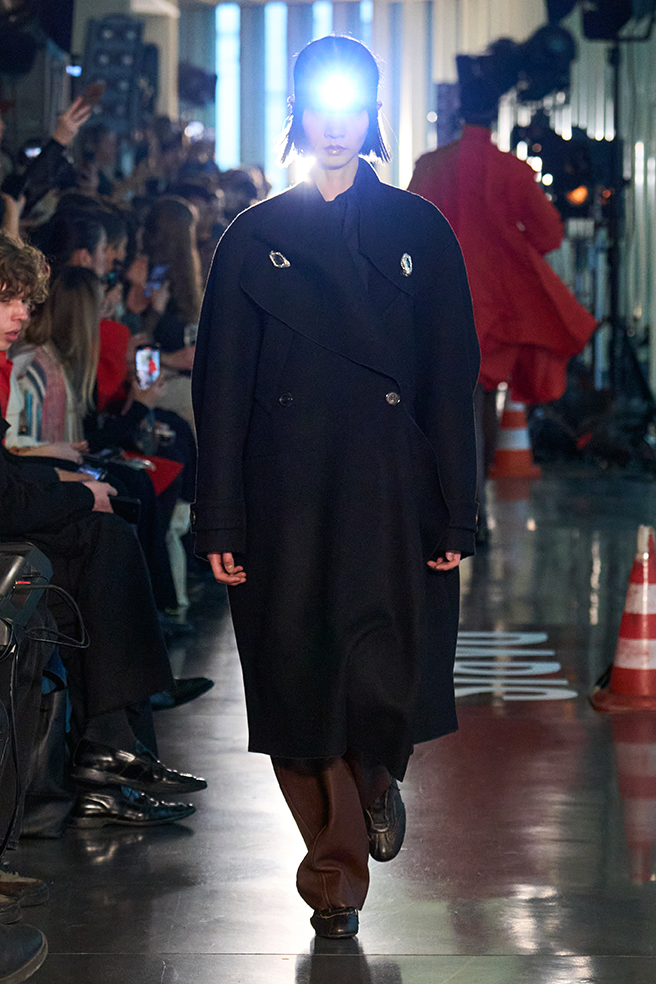
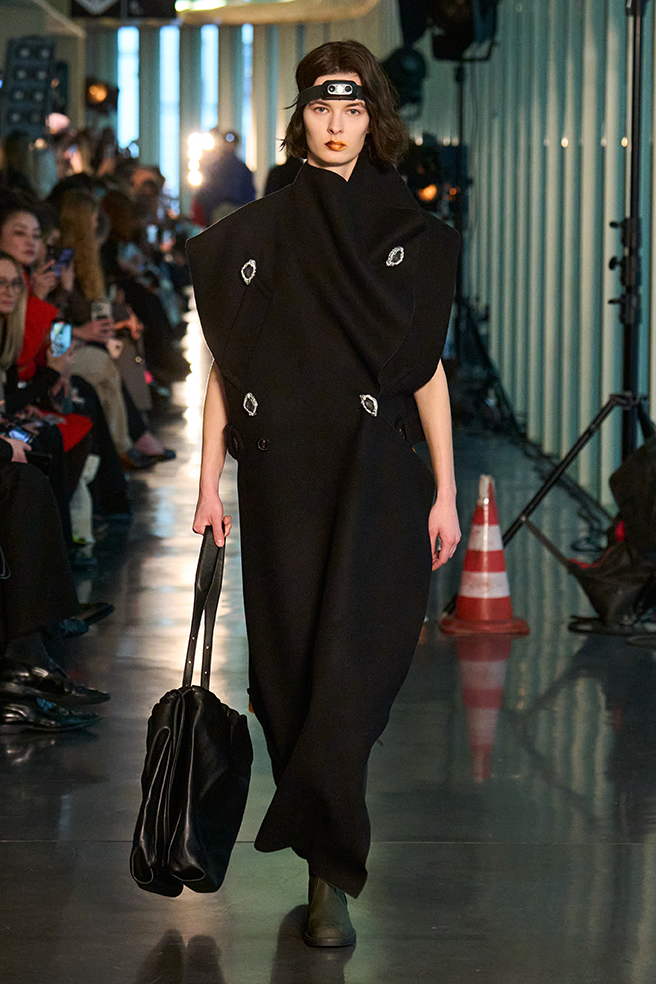
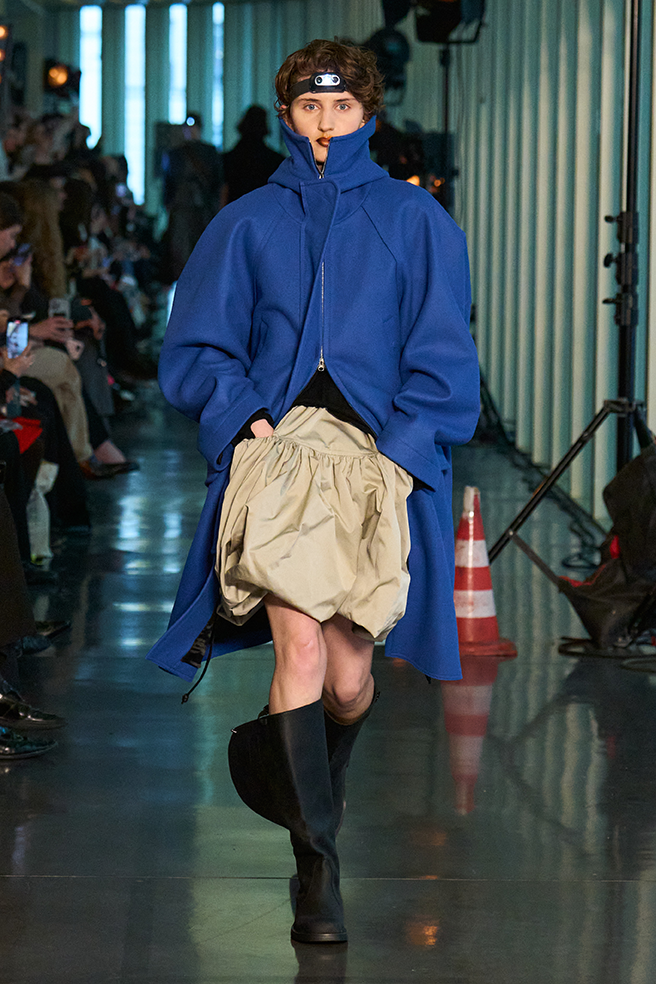
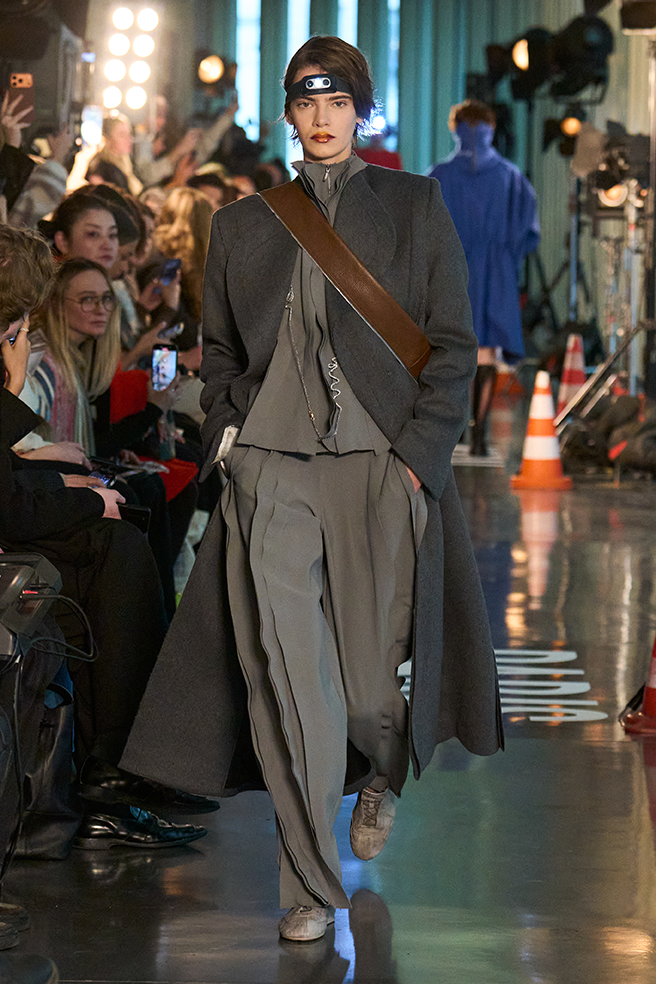
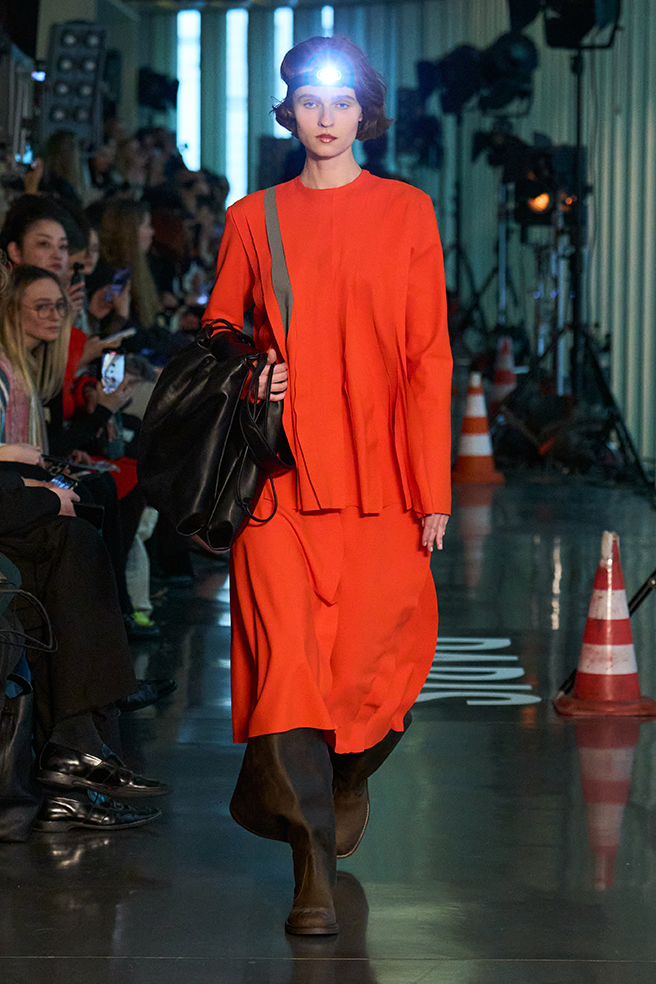
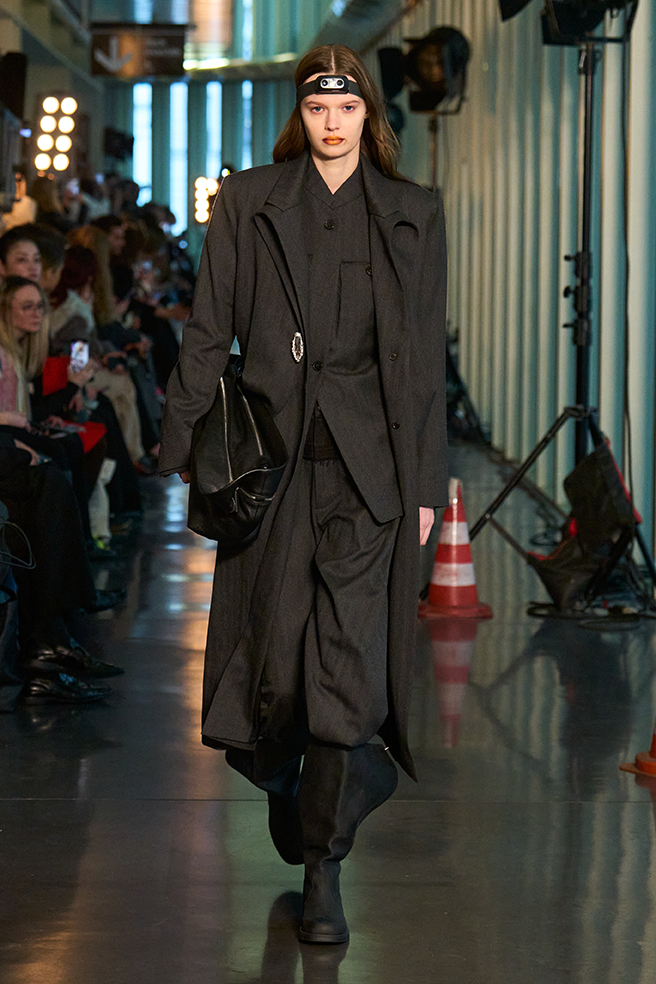
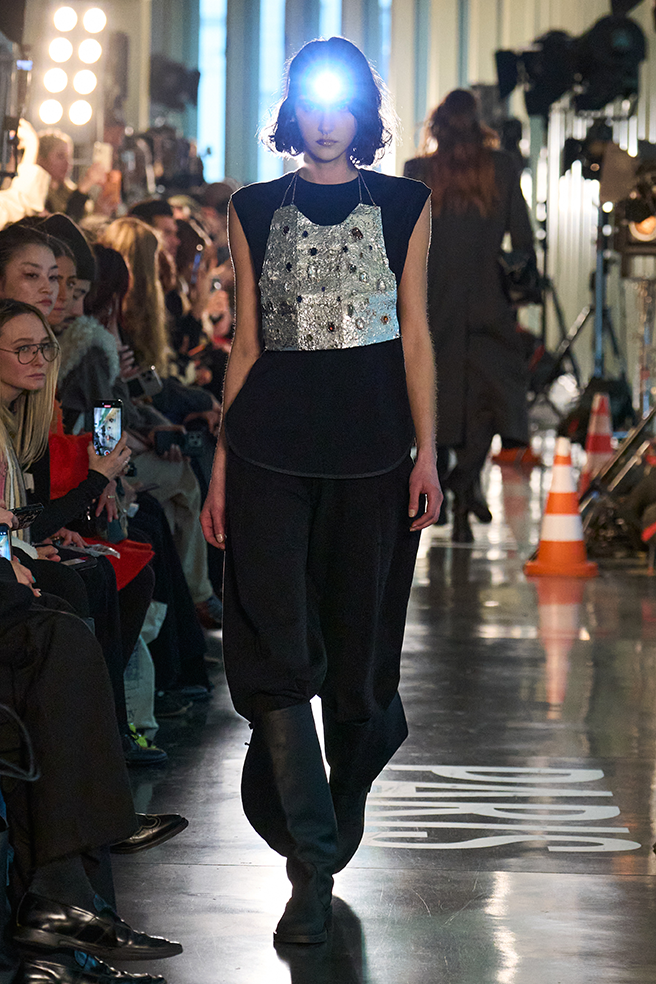
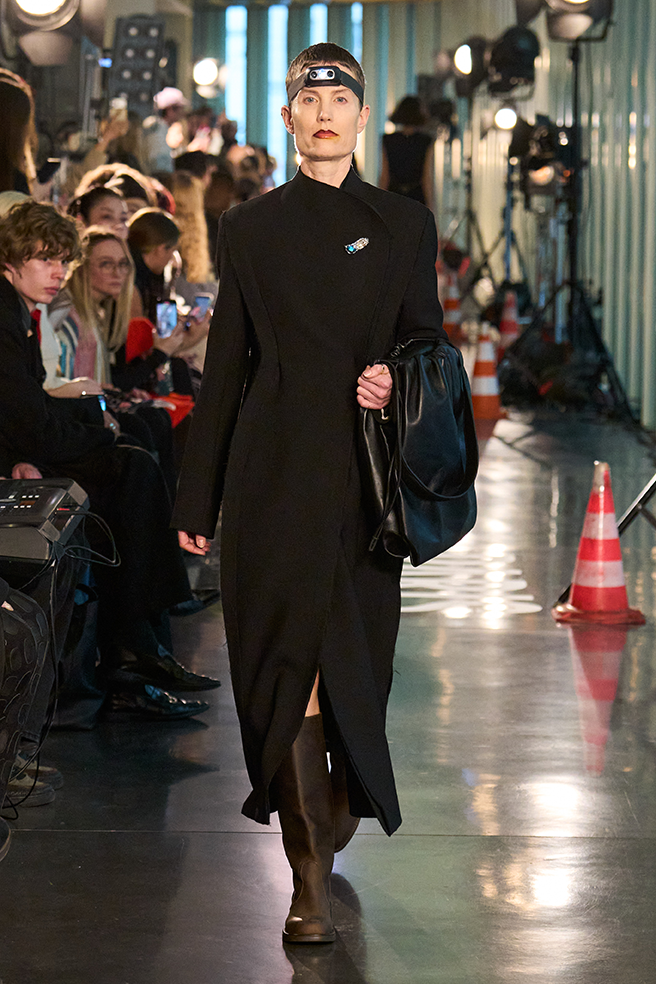
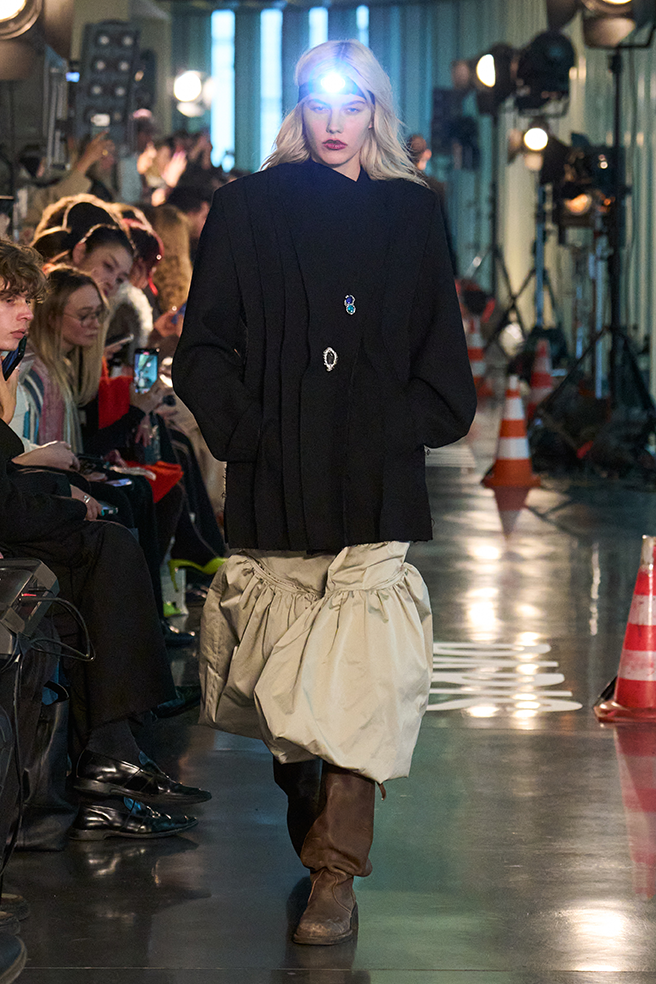
A headlamp is an unusual runway accessory, but at LITKOVSKA it was also the clearest way into the collection. Models walked with beams of light at their foreheads, an image drawn from winter nights in Kyiv when power outages leave people to find their way through darkened streets. For designer Liliia Litkovska, those moving lights resemble fireflies.
The idea gave a name to FIREFLY, LITKOVSKA’s Fall/Winter 2026–27 collection and its first runway presentation on the official Paris Fashion Week schedule. It could have made for a show in which the story overwhelmed the clothes. Instead, the garments held their own: layered, deliberately off balance, and built around a confident play on proportion.
Litkovska has described making the collection during an extreme winter, sometimes in ateliers without electricity or heat. That experience sits behind the headlamps, but it also informs a more practical question running through the show: how do clothes serve someone who has to keep moving? Coats were substantial, tailoring offered room to shift beneath it, and pieces looked as though they could be wrapped, rearranged, or worn in more than one way.
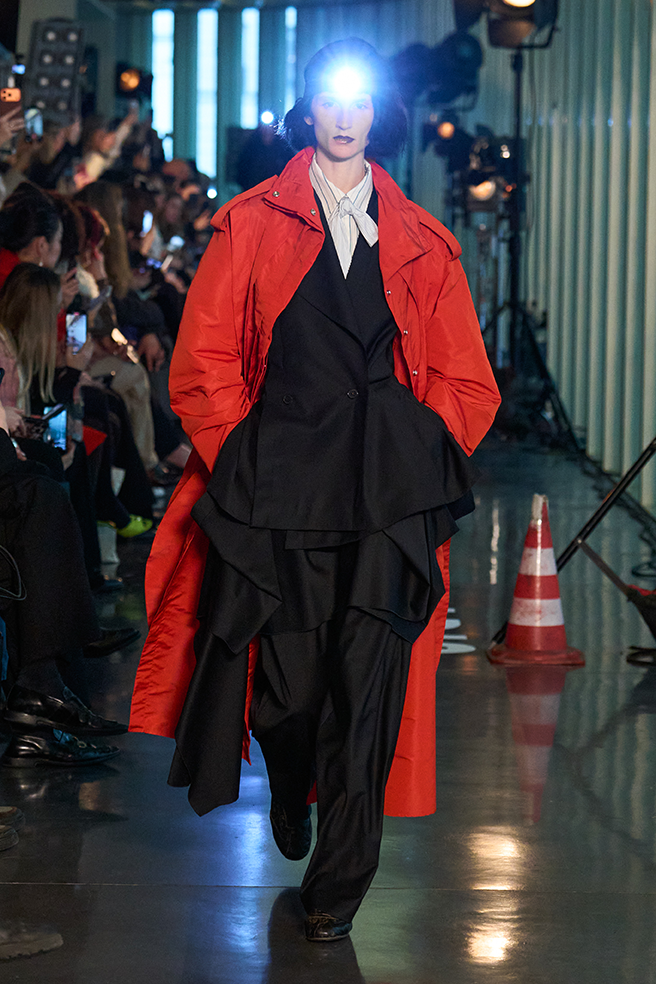
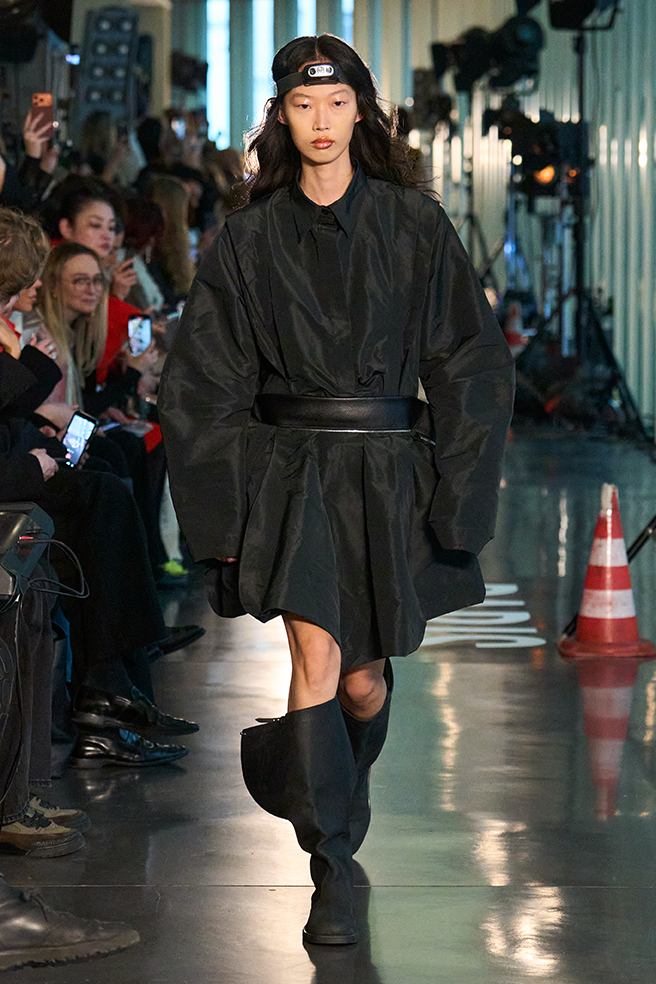
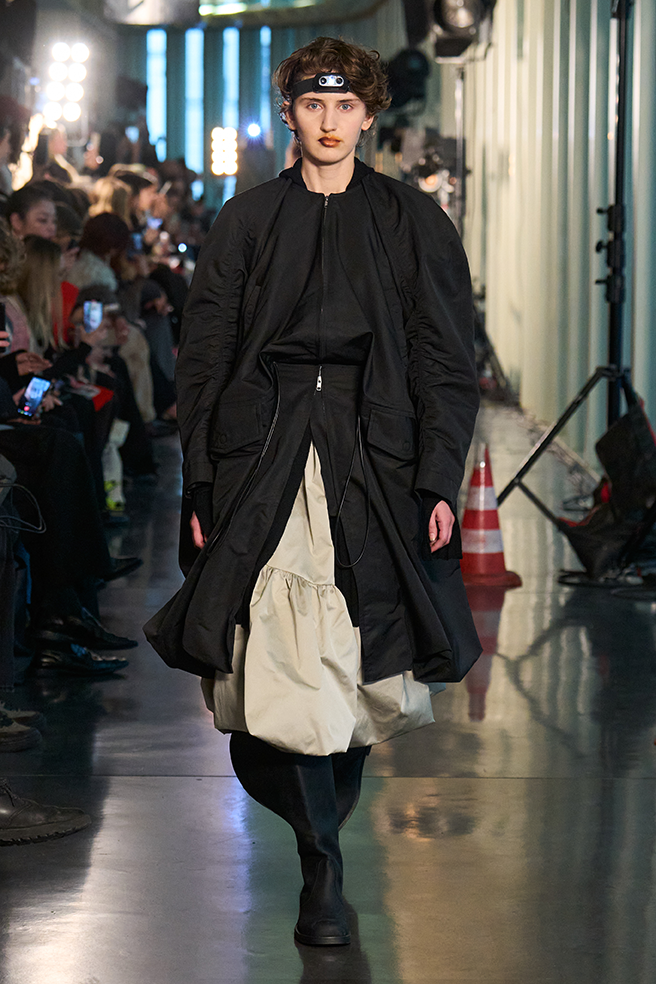
One black look gathered fabric around the body in uneven tiers, its volume changing from one side to the other as the model walked. Another placed a vivid red coat over a black double-breasted jacket and loose trousers. The red gave the eye a place to land, while the jacket’s flared shape interrupted the expected line of the coat. These were strong silhouettes without being overly tidy ones. Litkovska seemed interested in what happens when a garment slips out of its prescribed shape and finds a more compelling one.
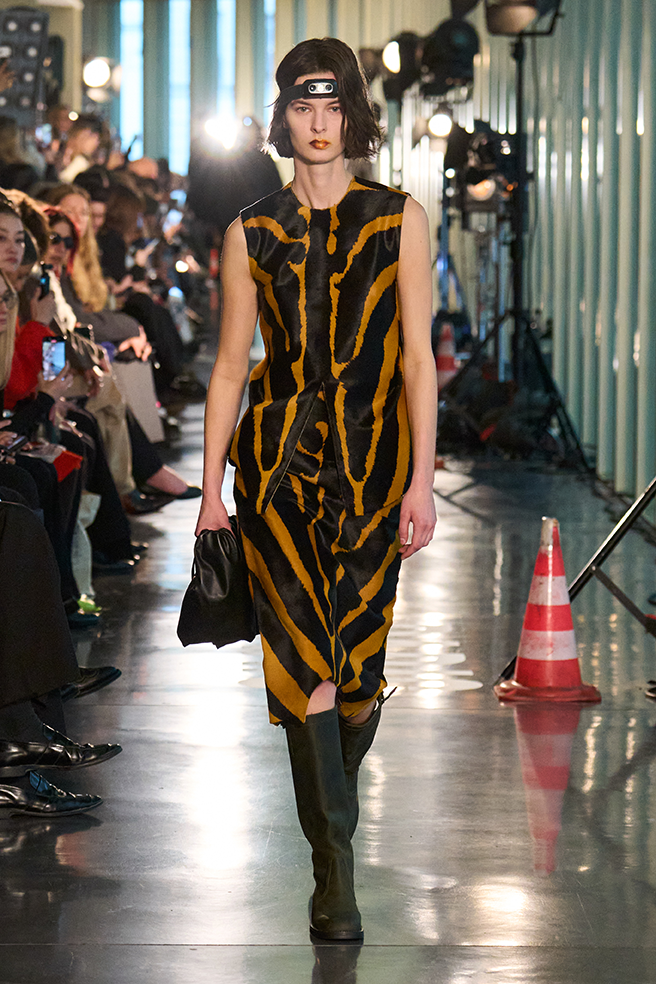
There was some serious deconstruction here, too. A pale, heavily textured top had threads falling away at the hem, worn over dark trousers and sneakers. It had the look of something still becoming, yet its bulk and softness made it feel entirely suited to the cold. Elsewhere, a sleeveless black-and-ochre patterned look cut closer to the body, offering a useful break from the more expansive layers around it.
At moments, the collection recalled the experimental dress of late-1980s New York and London—the kind of fashion that might have turned up at Danceteria, Palladium, or Area. The resemblance was less about copying a period than sharing its appetite for exaggerated volume, unexpected combinations, and clothes that give the wearer a presence before they say a word. Litkovska’s version was quieter in spirit, but it had a similar willingness to take a silhouette apart and see what else it could become.
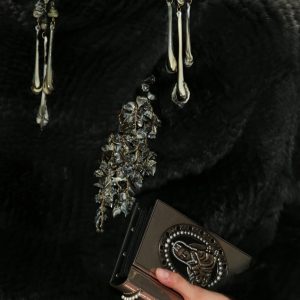
The designer also drew on Ukrainian Baroque architecture and costume, translating their expressive proportions into shifting volumes rather than literal historical references. Her new Besagy bag took its starting point from a traditional double-sided bag carried on journeys. On this runway, a bag was both an accessory and a reminder that people carry what matters with them.
Some of the show’s meaning came from knowing the circumstances in which it was made. Yet the best looks did not depend on the notes to make an impression. Their proportions, texture, and movement supplied enough reason to keep watching.
FIREFLY was a strong arrival on the official Paris schedule. Litkovska brought a deeply personal image from Kyiv to the runway, then trusted her long-standing interest in tailoring and transformation to do the rest. The headlamps may have provided the show’s most immediate image, but the clothes gave it staying power.