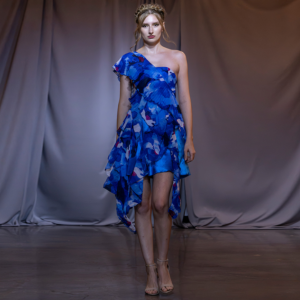






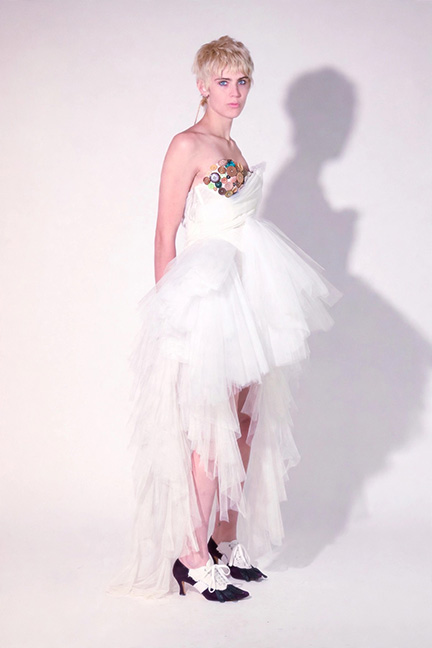
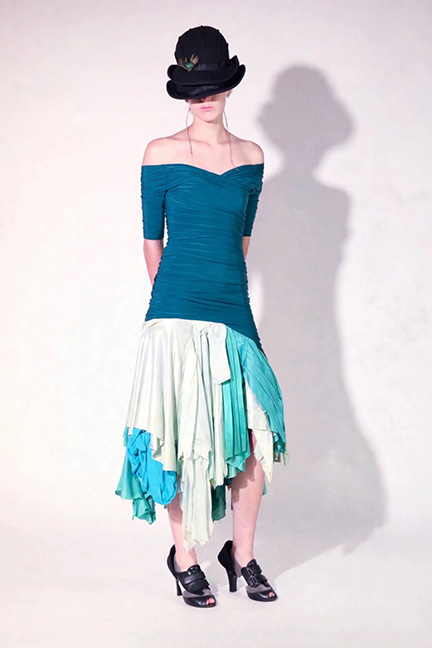
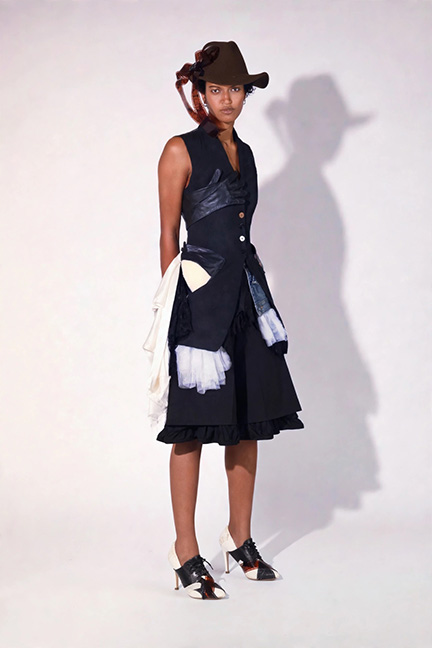
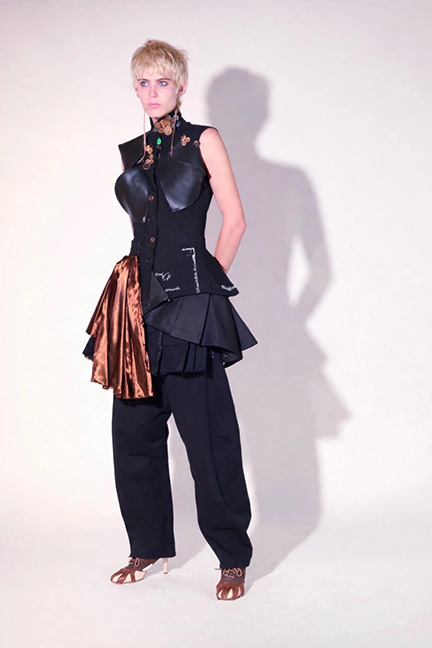
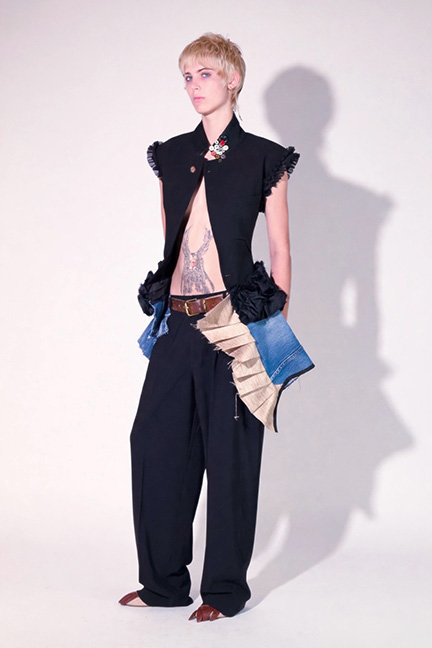
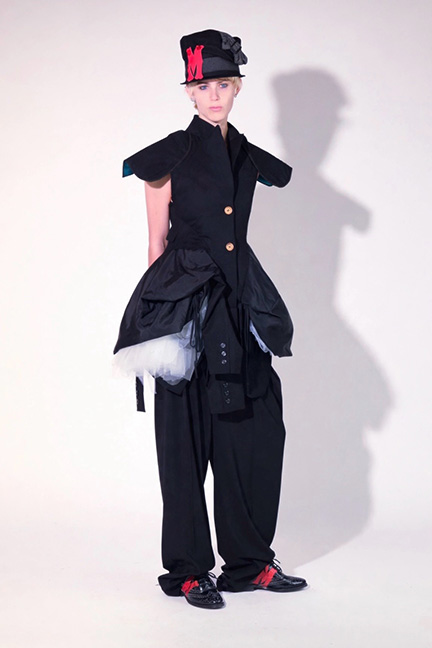
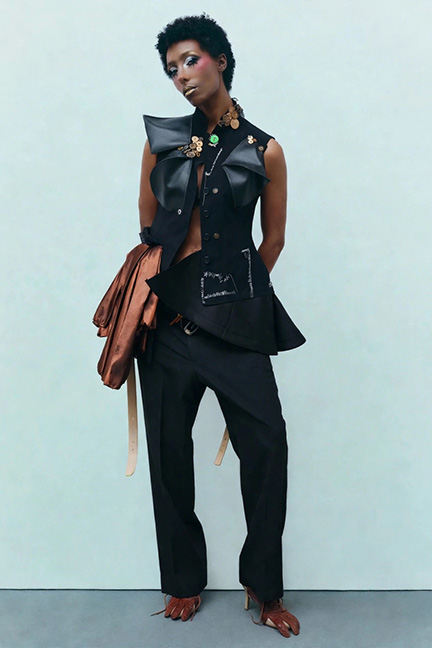
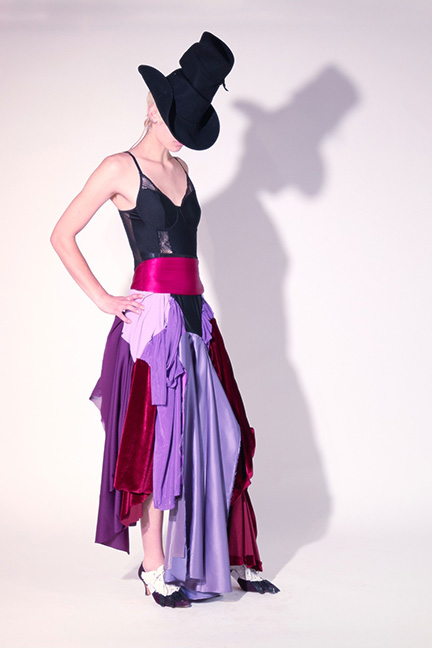
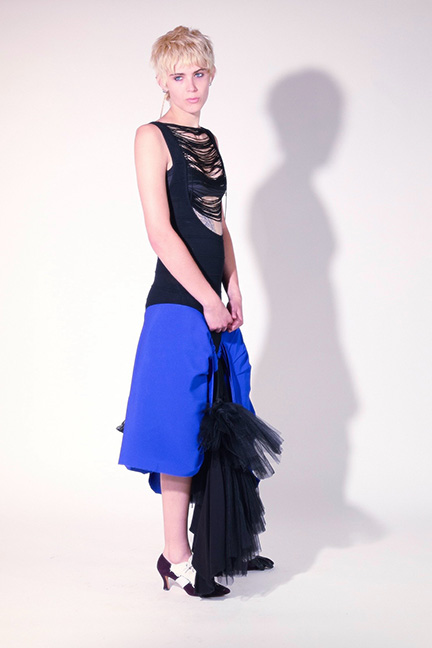
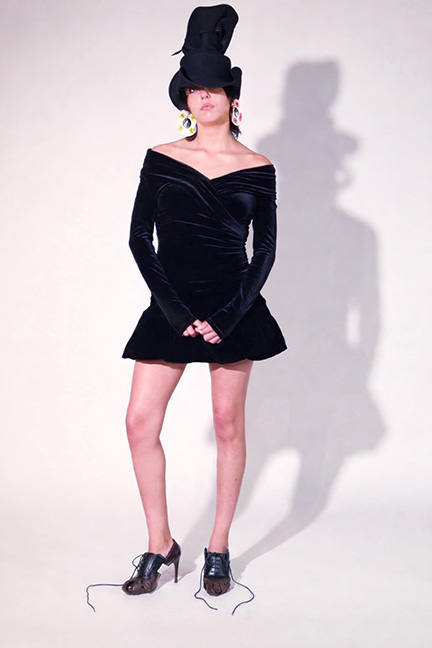
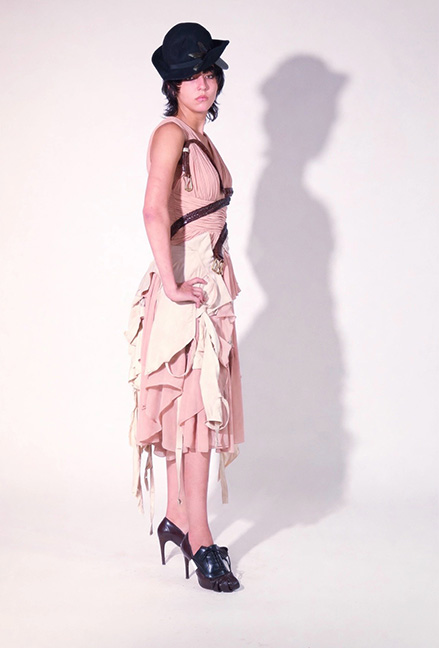
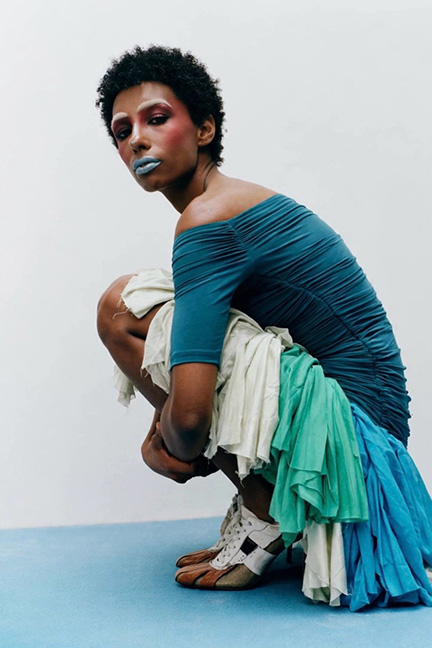
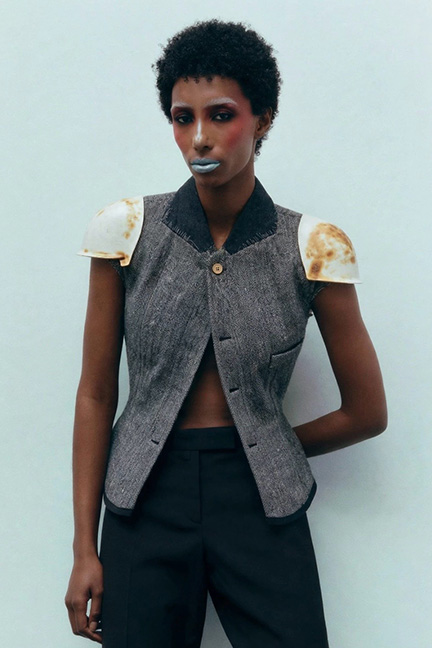
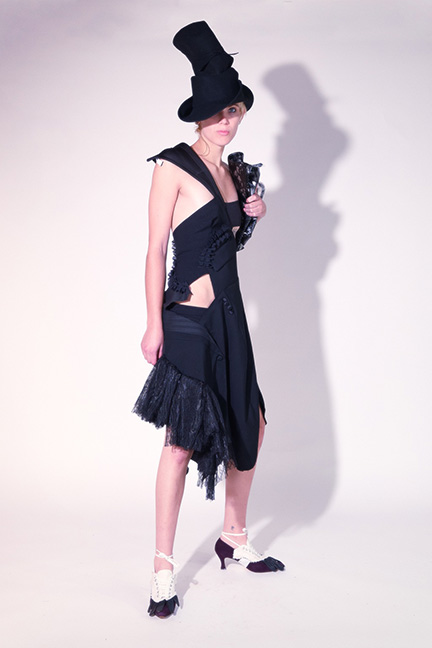
Fashion has a long memory, and for designer Menyelek Rose, the past is very much part of the creative process. His MENYELEK Spring 2027 collection, titled “THE NARRATOR,” continued an exploration of reconstruction, asymmetry and the history embedded in previously worn garments.
Presented at 35 Meadow Street in Brooklyn, the show departed from the traditional Manhattan NYFW circuit, opting for an independent setting that reflected the designer’s unconventional approach. While the choice offered an alternative presentation, it also placed the collection outside the established fashion-week landscape where much of the industry’s attention traditionally gathers.
Rose took an unusual role in the presentation, narrating the runway live as models moved to a soundtrack alternating between classic house & hip-hop. “Listen Before You Look” served as the show’s guiding phrase, inviting the audience to consider the memories, references and emotions behind the clothing before taking in the finished looks. It was an interesting premise, particularly for a collection so deeply rooted in fashion history.
The clothes combined reconstructed tailoring, displaced proportions, layered fabrics and unexpected assemblages, with Black, Denim & flashes of Blue appearing throughout. Rose’s evolving MENI Process, which transforms existing garments into new silhouettes, provided the conceptual foundation. Familiar pieces were cut, reconfigured and given new identities, with asymmetry serving as a recurring design language.
Yet the collection also prompted some familiar fashion-history comparisons. The deconstructed vocabulary of Vivienne Westwood, John Galliano & Rei Kawakubo of Comme des Garçons, along with echoes of Ann Demeulemeester & Stephen Burrows, surfaced in several looks. Some references were sufficiently pronounced to leave this observer wondering where inspiration ends & independent interpretation begins. The question is not whether these designers are legitimate influences, but whether the resulting work establishes a sufficiently distinct identity of its own.
There is also the practical question of how some of the more intricate, highly individual assemblages might translate into repeatable retail offerings. The appeal of one-of-a-kind reconstruction is understandable, but translating such highly specific constructions into a commercially viable collection presents its own challenges.
MENYELEK delivered a cohesive collection with a distinct point of view and an ambitious presentation. Whether its strongest ideas represent a new design language or an ongoing conversation with those who came before remains an interesting question.
Visit the Menyelek Website here.